

Beyond the Blueprint. Into the Wild.
X-Team
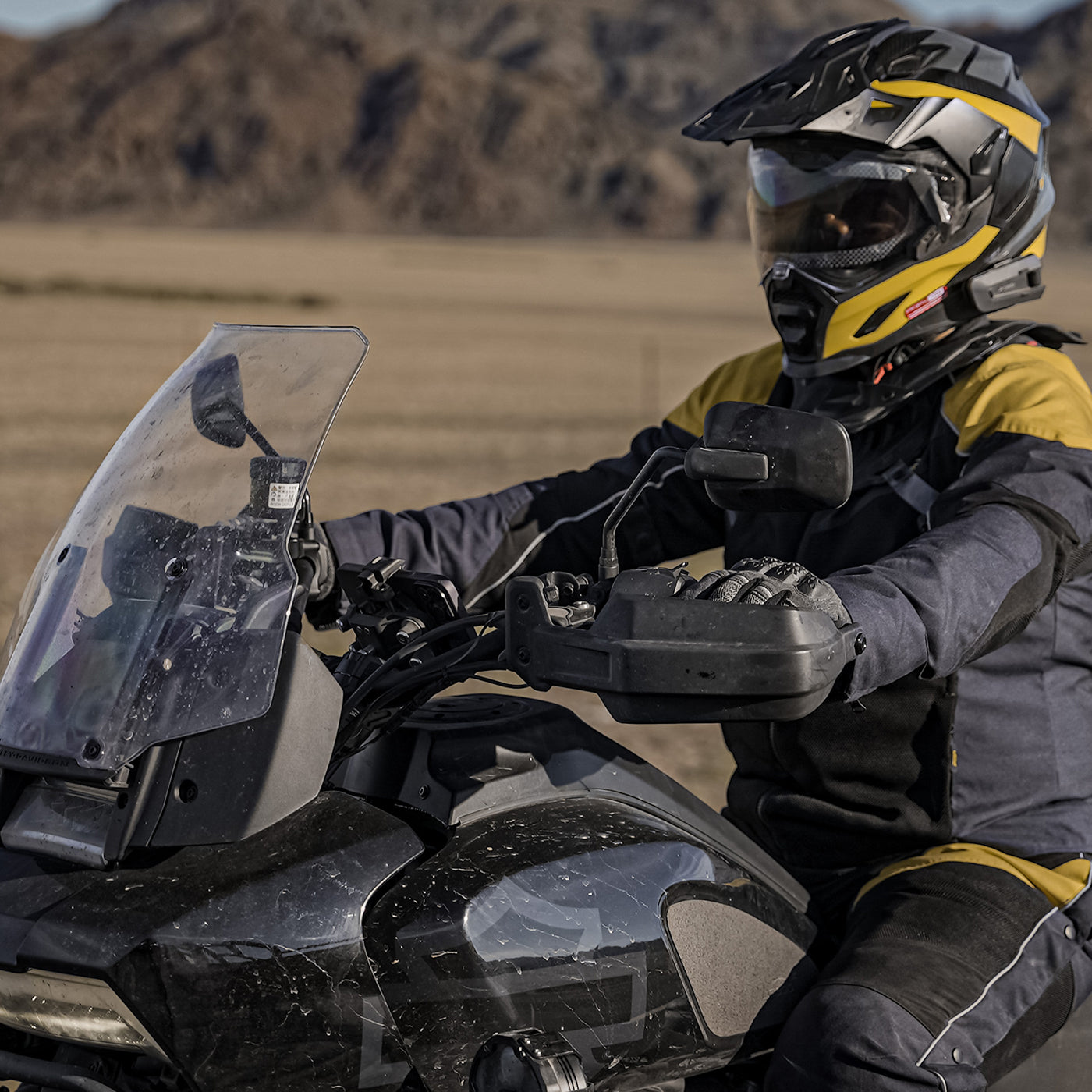
Before any part leaves our workshop, it's put to the ultimate test. It’s a process we call real-world validation, led by our dedicated X-Team.
Frequently Asked Questions
What is the difference between an engine guard and a crash bar?
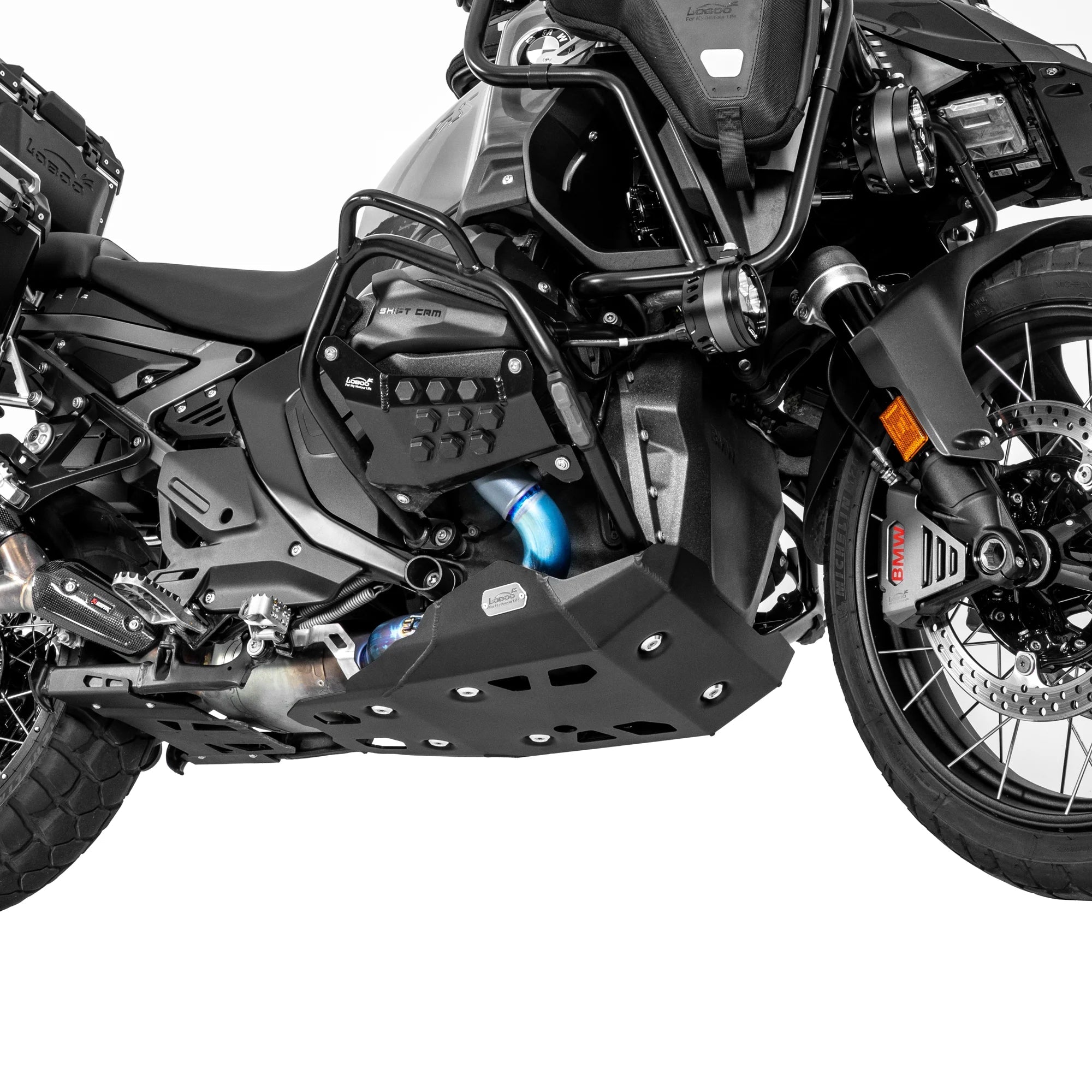
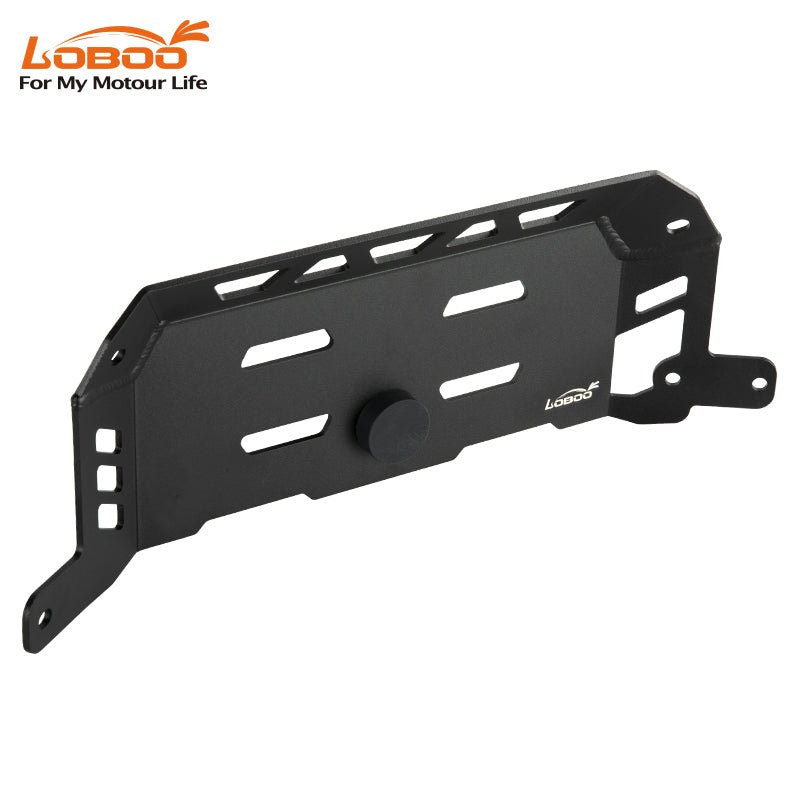
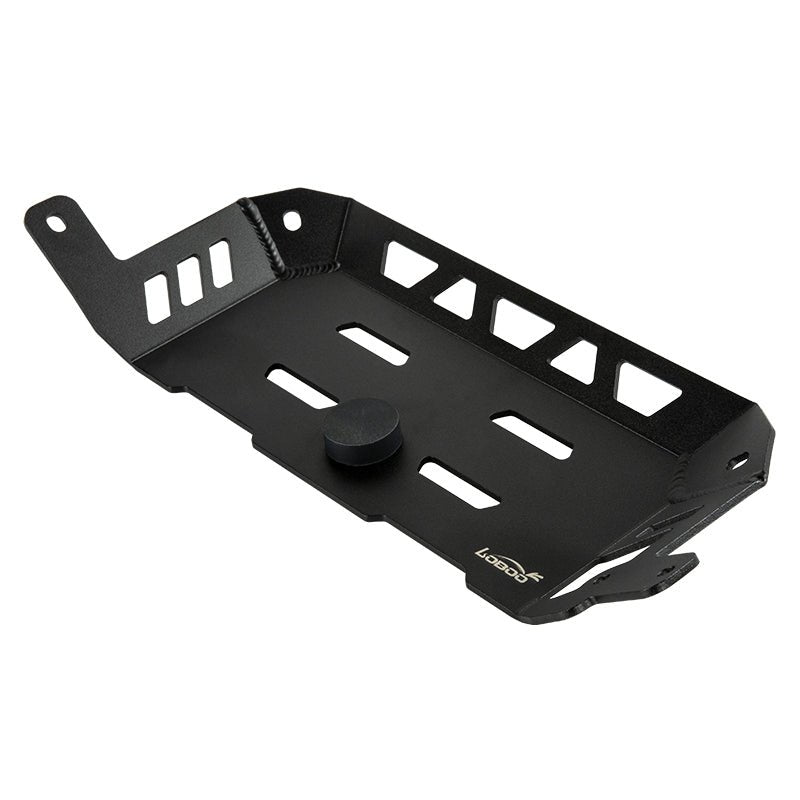
An engine guard (skid plate or bash plate) mounts under the engine to protect the oil pan, sump, and exhaust headers from rocks and debris that come up from the trail surface below. A crash bar is a tubular steel guard that wraps around the engine sides to absorb lateral impact during a tip-over. They protect against completely different threats — one from below, one from the side — and many ADV riders run both simultaneously, since the two systems mount independently and don't interfere with each other.
Can I still change my oil with the engine guard installed?
Yes — all LOBOO engine guards include pre-cut access ports aligned to the oil drain plug and filter on each specific model. This was a deliberate design choice: skid plates that require removal for every service quickly get left off. By keeping your drain plug accessible through the guard, LOBOO ensures you actually keep the protection in place. The access port positions are verified against each bike's OEM service layout, so the alignment is exact.
Why does LOBOO use 4mm aluminum instead of the more common 3mm?
Three millimetres is adequate for light gravel trails and low-speed off-road use. Four millimetres provides meaningfully better resistance to the sharp, high-energy rock strikes that occur on technical ADV terrain — a rock corner at speed, a hard landing off a step, or a fast trail section with exposed roots. The weight penalty is small (typically under 200g difference for a full-size skid plate), but the impact resistance increase is significant. LOBOO's X-Team validated the 4mm spec through actual trail use, not just lab testing.
Will the engine guard affect ground clearance?
Minimally. LOBOO engine guards are profiled to closely follow the engine's existing underside geometry, adding only the plate thickness (4mm) to the effective lowest point in most cases. The guard is designed to clear the same obstacles your stock bike clears, with the difference that when contact does occur, it's the aluminium plate taking the hit rather than your oil pan. On the BMW R1300GS, the guard profile is matched to the OEM chassis contours to minimise any clearance reduction.
Does the guard rattle or vibrate at speed?
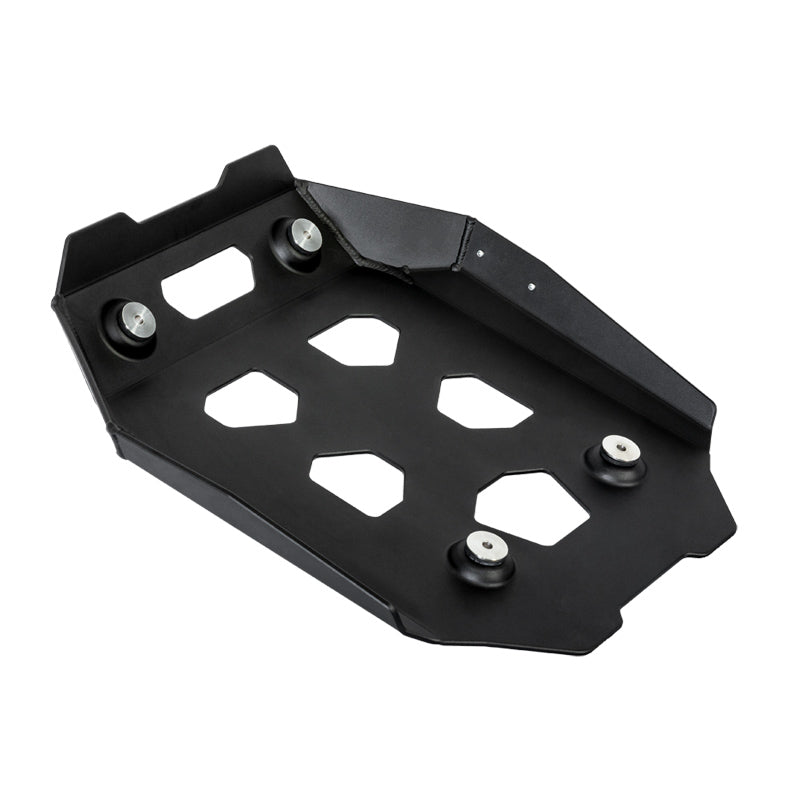
No — LOBOO engine guards use rubber gaskets between the guard and the frame mounting points. These vibration-damping mounts absorb the resonance that causes bare metal-to-metal guards to rattle at highway speeds or on rough roads. The rubber also cushions secondary impact force, reducing stress at the bolt attachment points over time. If you ever notice any vibration after installation, check that all bolts are torqued to spec — this is the most common cause of post-install noise on any bolt-on guard.
Is the engine guard compatible with aftermarket exhaust systems?
LOBOO engine guards are designed around OEM exhaust routing for each supported model. If you're running an aftermarket exhaust with a different pipe path or header position, check the clearance between the guard profile and your exhaust before ordering. Full-system exhausts that re-route headers low and wide are the most likely fitment conflict — slip-on exhausts that only replace the muffler section are generally compatible. Contact our team with your exhaust brand and model if you're unsure.
What other protection should I pair with an engine guard?
For comprehensive ADV protection, an engine guard works best alongside crash bars (side protection from tip-overs), a headlight guard (stone chip and branch protection for the headlight lens), and a radiator guard if your model is covered. Together, these form a complete protection layer — underside, sides, and front — that covers the three most common impact zones on technical terrain.
Motorcycle Engine Guards & Skid Plates — Buying Guide
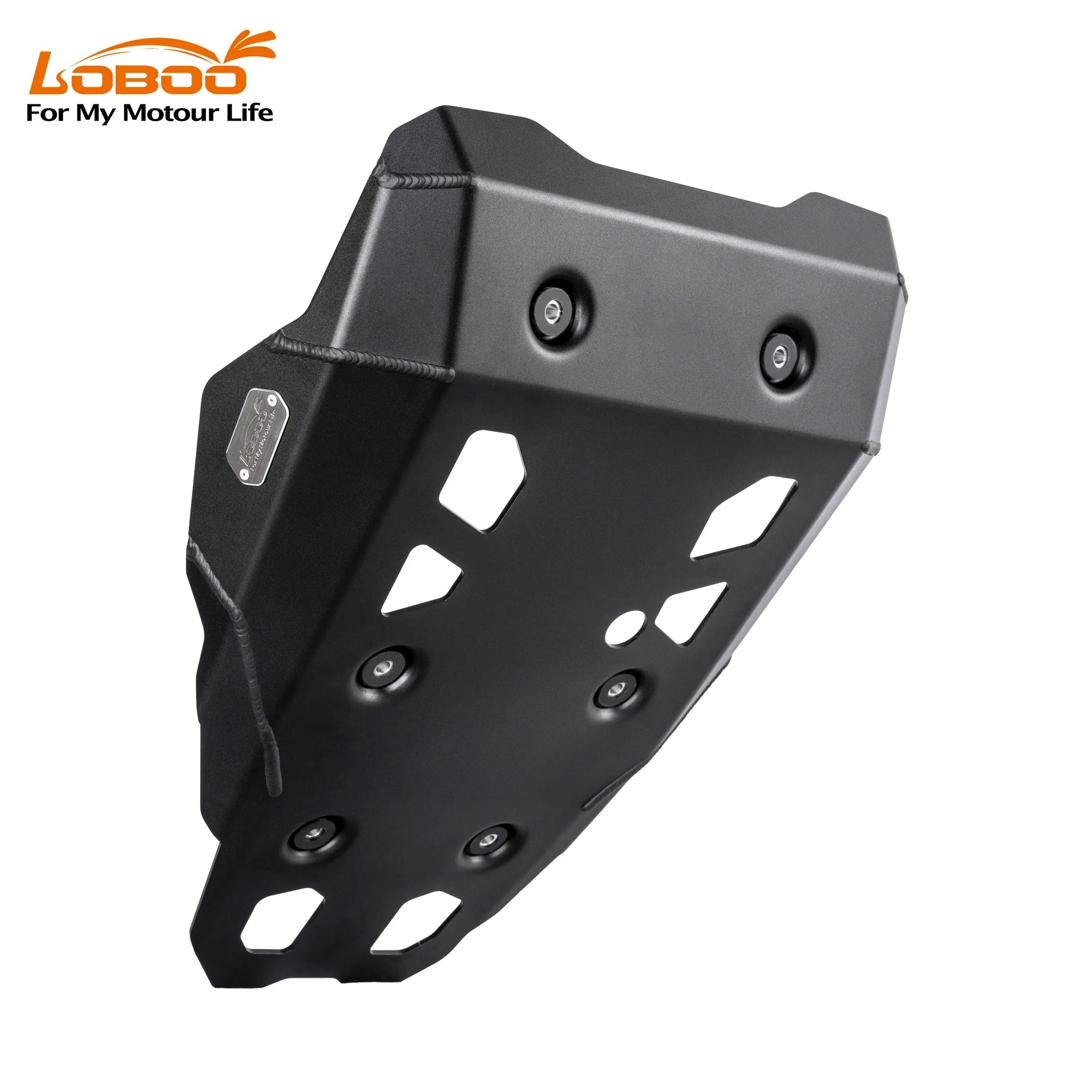
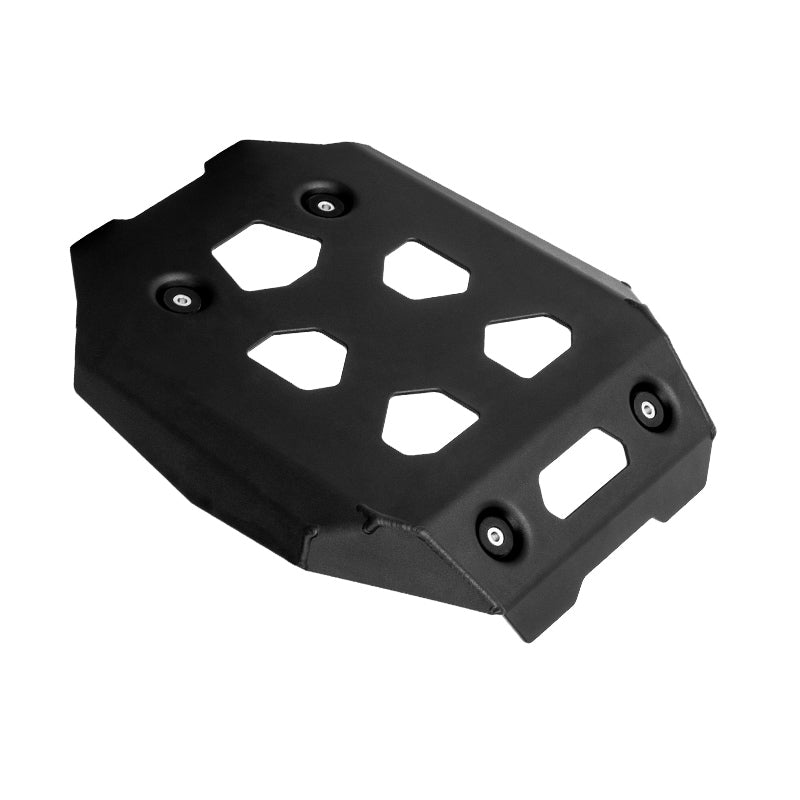
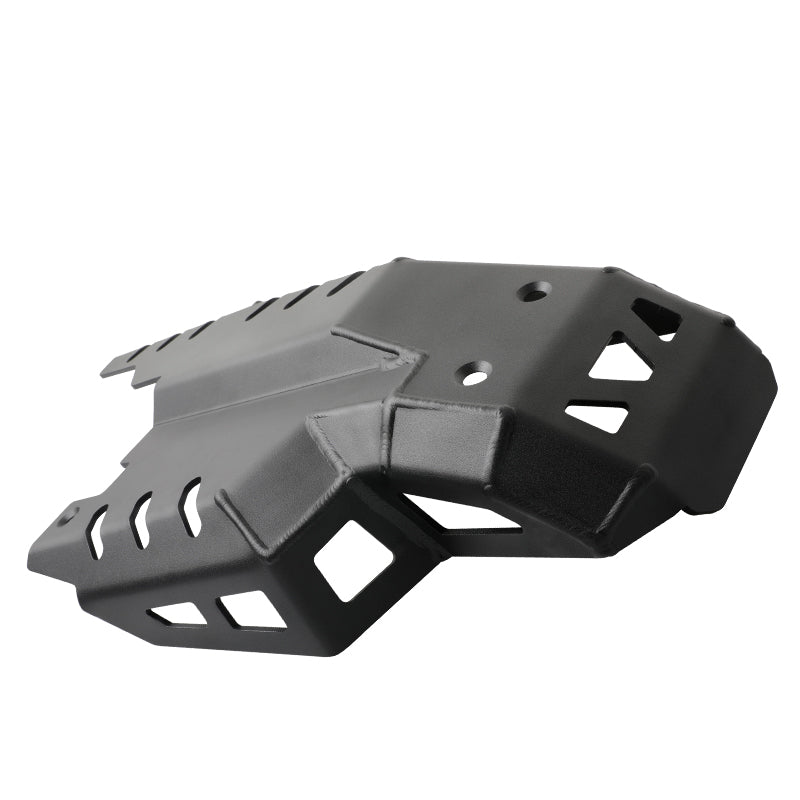
Every rock you ride over is a potential repair bill. The oil pan, exhaust headers, and frame skids on the underside of your engine are exposed to direct impacts from trail debris — and a single hard hit can crack the oil pan, puncture the sump, or bend the exhaust in a location that ends your trip on the spot. LOBOO engine guards are 4mm thick aluminum skid plates precision-formed for BMW, Honda, and KTM adventure motorcycles, designed to absorb that impact so your engine components don't have to.
Why 4mm Thickness Is the Right Call
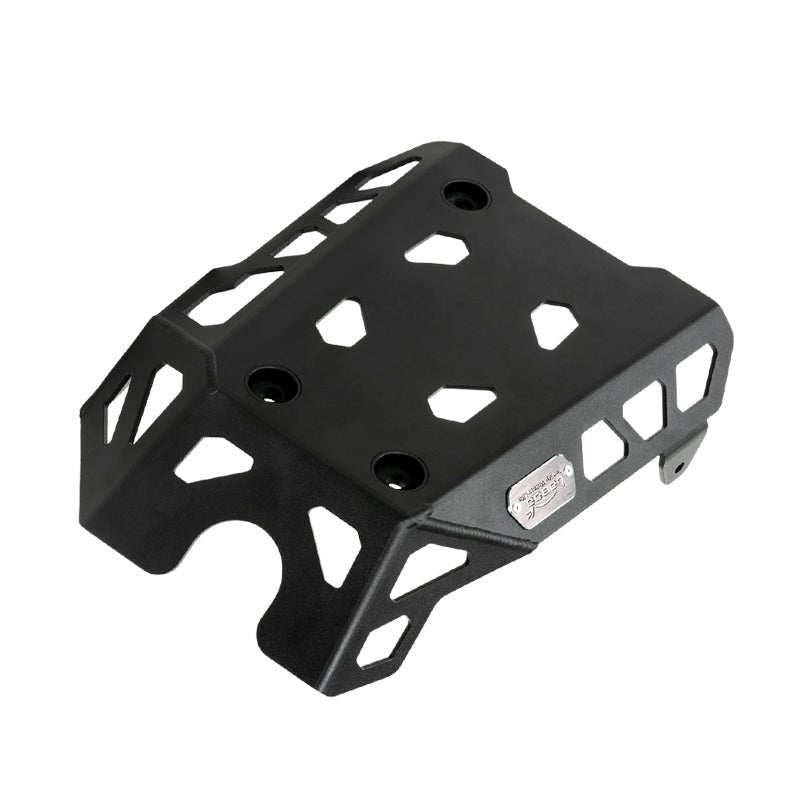
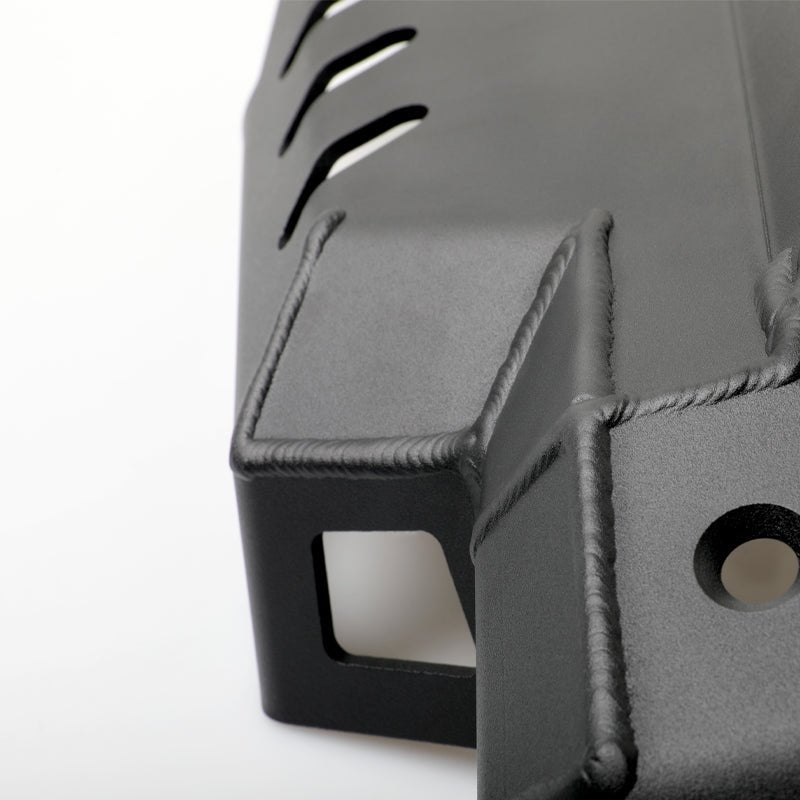
Most aftermarket skid plates use 3mm aluminum — enough for light trail use but marginal against the kind of rock strikes that ADV riding actually produces. LOBOO uses 4mm high-strength aluminum alloy across its engine guard range. That extra millimetre represents a meaningful increase in impact resistance for the rocks, roots, and concrete kerbs that catch riders off-guard on fast trail sections and urban edges alike. The one-piece formed construction (no welded seams under the impact zone) means the guard distributes force across the full plate rather than concentrating it at a joint.
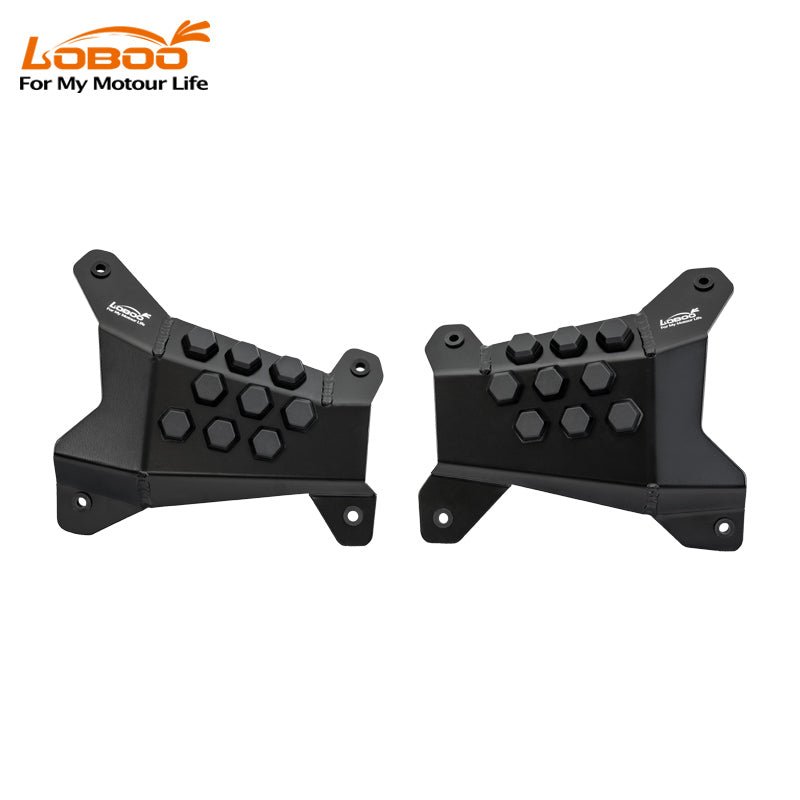
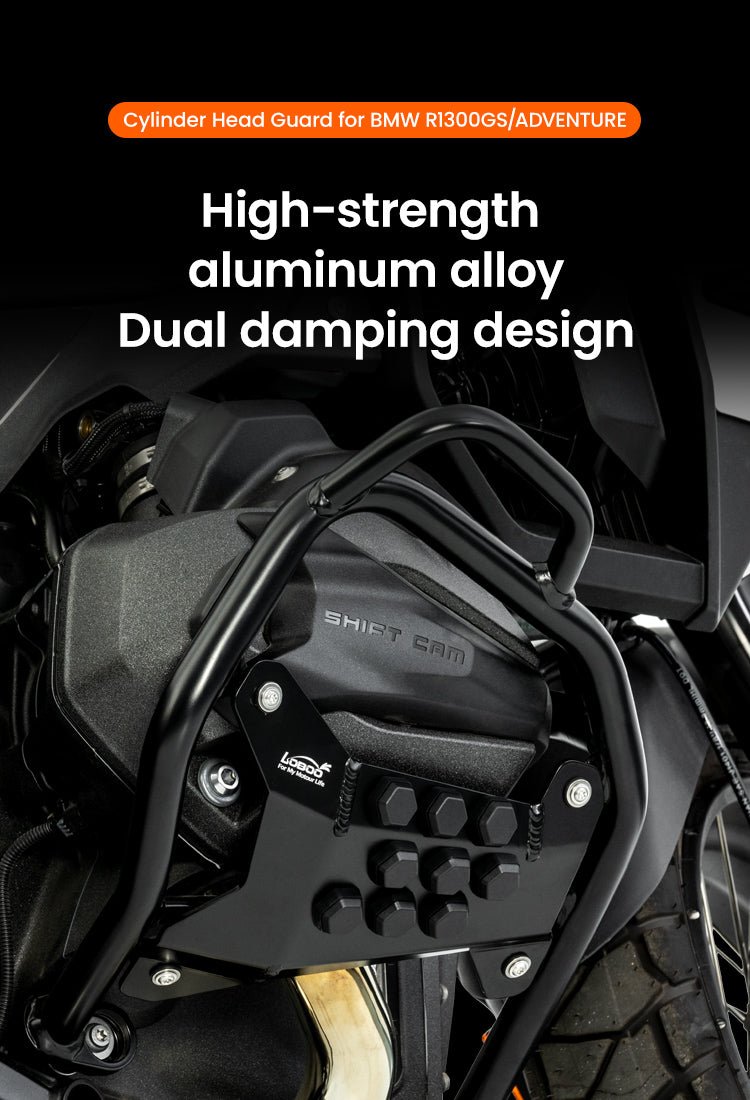
- 4mm High-Strength Aluminum Alloy — Heavier-gauge than standard 3mm guards for superior rock strike resistance. One-piece formed design with no seams in the impact zone.
- Pre-Reserved Oil Drain Access Port — Maintenance cutouts aligned to your oil drain plug and filter mean you never have to remove the guard for a routine service. Ride more, wrench less.
- Vibration-Damping Rubber Mounts — Rubber gaskets between the guard and frame reduce transmitted vibration and absorb secondary impacts, protecting mounting bolts from loosening over time.
- Anodized Surface Finish — Corrosion-resistant anodized coating in black or silver that holds up to trail mud, water crossings, and abrasion without flaking or rusting.
- Lossless Bolt-On Installation — Mounts directly to original frame attachment points. No drilling, no welding, no permanent modification to your bike's structure.
Engine Guard vs. Crash Bar: What's the Difference?
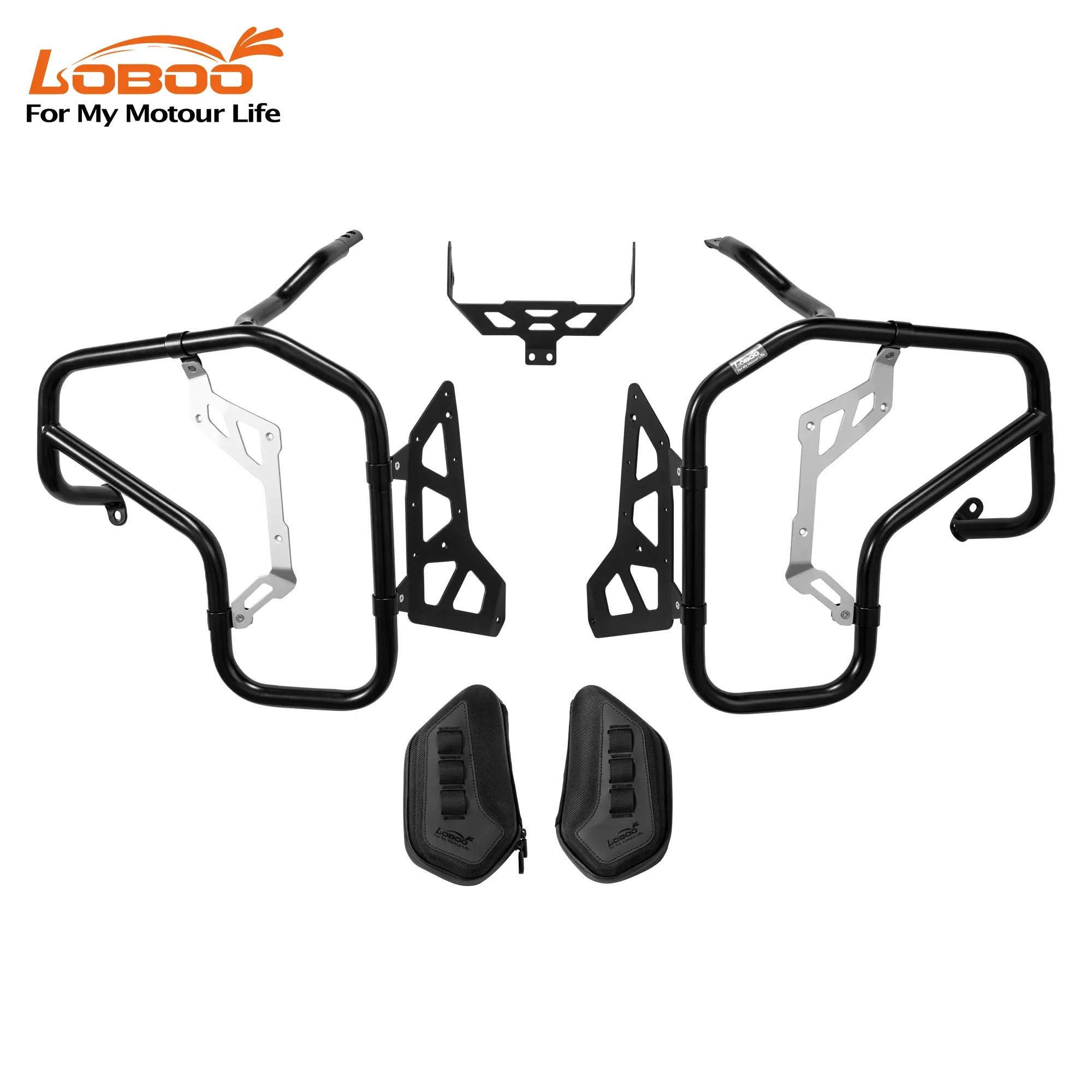
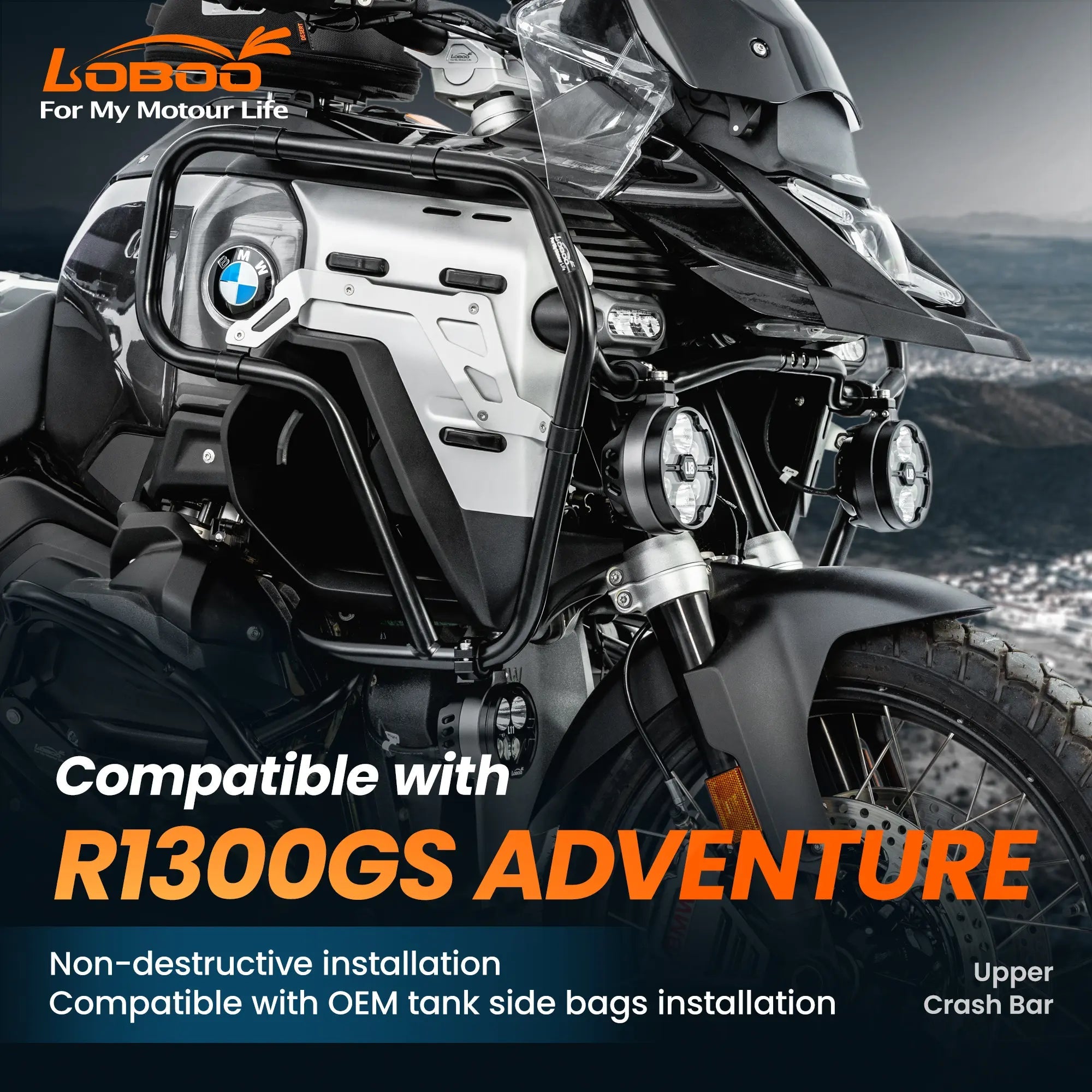
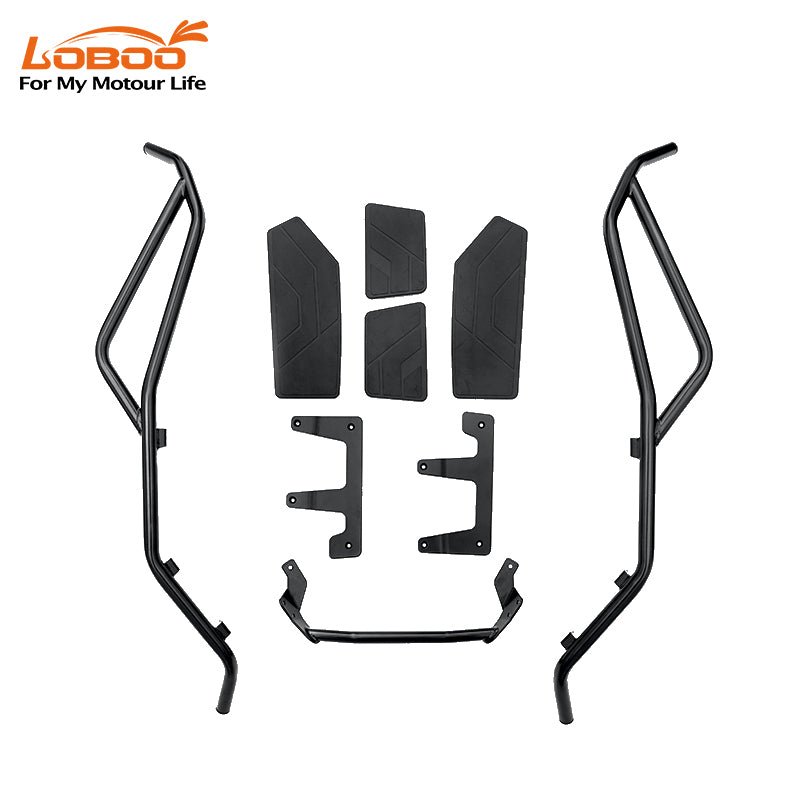
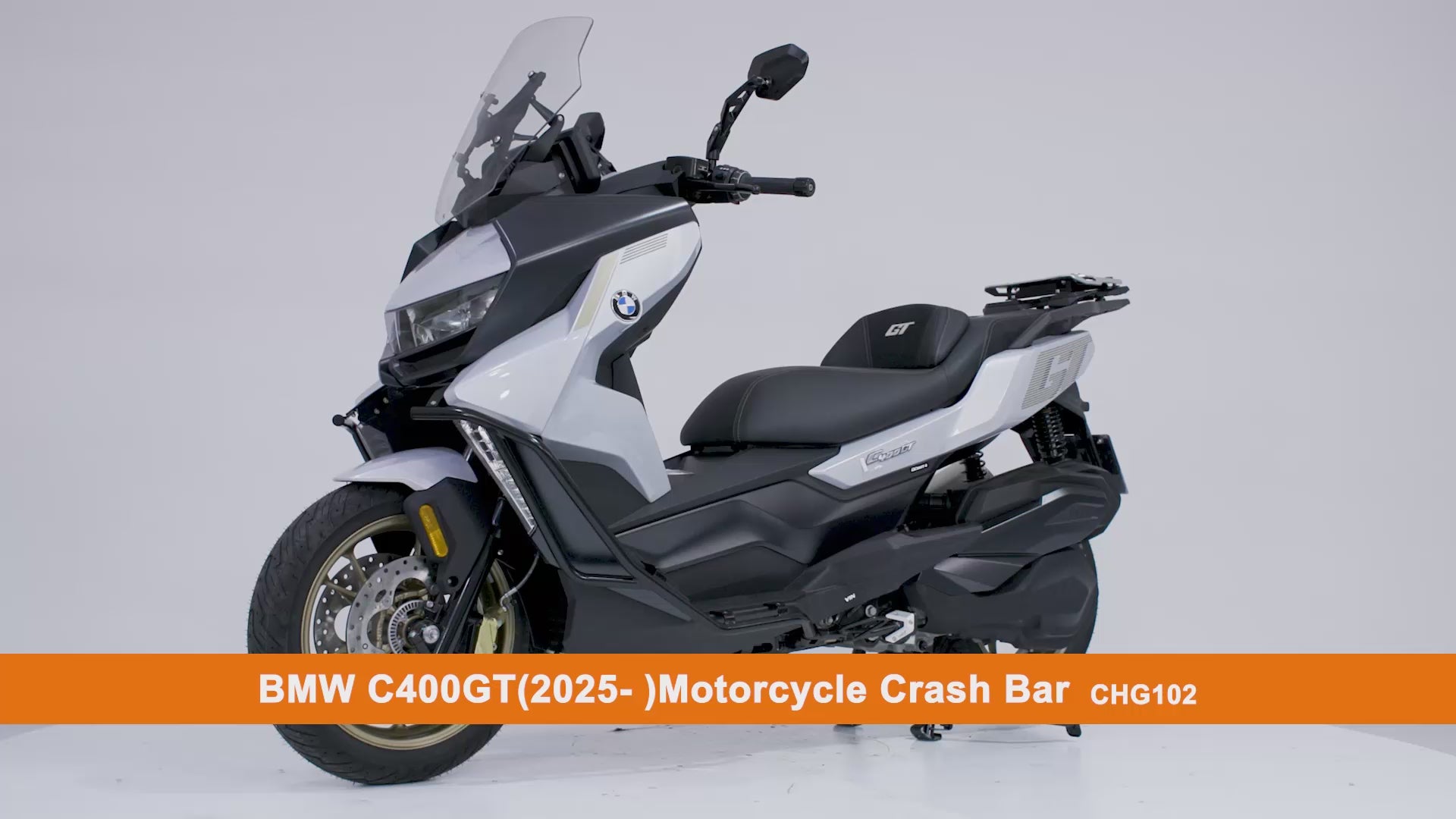
These two products protect different parts of your bike from different threats. Crash bars are tubular steel guards that wrap around the engine sides and fairings to absorb lateral impact during a tip-over — they protect against the bike falling over sideways. Engine guards are flat aluminum skid plates mounted under the engine to absorb vertical and forward impacts from rocks, roots, and debris you ride over — they protect against what comes up from below. Serious ADV riders run both: crash bars for tip-over protection and an engine guard for trail debris. The two systems mount independently and don't interfere with each other.
Compatible Models
Current fitments include the BMW R1300GS / R1300GS Adventure (2023+), Honda CB500X (2019+) / NX500 / CB400X, and KTM 790/890 Adventure. LOBOO also covers the Yamaha XMAX 300 with a 3mm guard — check the individual listing for full fitment details. New fitments are added regularly, with engineering driven by X-Team testing data on the models that see the most off-road use.
Complete Your Undercarriage Protection
An engine guard covers the underside. Pair it with stainless steel crash bars for full-perimeter protection — sides and bottom simultaneously covered. For visibility when exploring technical sections at dusk, add LED auxiliary lights. And when the trail demands confidence from every contact point, wide foot pegs and a kickstand extension round out the functional ADV build.