

Beyond the Blueprint. Into the Wild.
X-Team
Before any part leaves our workshop, it's put to the ultimate test. It’s a process we call real-world validation, led by our dedicated X-Team.
Frequently Asked Questions
What is the difference between electrochromic and photochromic helmet visors?
Photochromic visors use a chemical reaction triggered by UV light to darken — they respond slowly (3–5 seconds), don't work behind UV-blocking windscreens, and are ineffective in low-UV conditions like overcast days, tunnels, or at night. Electrochromic visors like the HL08 use a voltage-controlled optical layer activated by a light sensor, not UV. This means the HL08 responds in 0.01 seconds in any light condition — bright sun, tunnel entry, dappled forest light, or sudden high-beam glare at night — regardless of UV levels or windscreen blocking.
How long does the battery last between charges?
The HL08's built-in 120mAh lithium battery provides extended operation between charges — battery life varies depending on how frequently Auto Mode triggers tint adjustments, but for most riding conditions a full charge covers multiple full-day rides. The USB-C charging connection means you can top it up from the same charger as your phone or from your bike's USB power output. The HL08 can also be used in Manual Mode when the battery is low, conserving charge for tunnel and sudden-change scenarios where Auto Mode is most critical.
Does the HL08 work at night against oncoming headlights?
Yes — and this is one of the most practical advantages of electrochromic over photochromic technology. At night, there is no UV light for a photochromic lens to react to, so traditional tinting visors offer no protection against high-beam glare. The HL08's light sensor detects the intensity of visible light directly — including the sudden intense brightness of an oncoming high beam — and activates tinting in 0.01 seconds to reduce glare. In Manual Mode, you can pre-set the tint level for night riding to provide consistent anti-glare protection.
Will the adhesive mount damage my helmet visor?
No — the HL08 uses a damage-free adhesive mount designed to attach and remove without leaving marks on the visor surface. It is repositionable, allowing you to adjust placement for optimal sensor positioning, and fully removable if you change helmets or want to transfer the unit. The adhesive is designed for curved helmet visor surfaces. For best results, clean the visor surface before installation and allow 24 hours for the adhesive to fully cure before riding.
Does it work in Auto Mode behind a tinted or UV-protected windscreen?
Yes — unlike photochromic visors that fail behind UV-blocking windscreens, the HL08 uses a visible-light sensor rather than a UV trigger. A tinted or UV-coated windscreen reduces the light reaching the sensor slightly, but the HL08 detects the change in visible light intensity and adjusts tint accordingly. Riders on enclosed or semi-enclosed ADV bikes with large windscreens should be aware that the sensor reads the light environment behind the screen — which is the relevant environment for their vision — rather than the raw ambient light outside.
Can I switch between Auto and Manual mode without removing my gloves?
Yes — mode switching is designed for gloved use. A long-press on the control button toggles between Auto Mode and Manual Mode. In Manual Mode, a single press cycles through available tint levels. Both actions are confirmed with an indicator light, so you can operate the visor without looking at it directly. The button profile and size are optimised for ADV gloves rather than thin sport gloves, but the long-press action works reliably with most motorcycle glove types.
What other LOBOO products pair well with the HL08 for night and low-light riding?
The HL08 manages what you see through your visor; LOBOO auxiliary lights manage what the road ahead looks like. Running both simultaneously gives you the complete low-light riding package: external illumination from 15,000–21,000lm auxiliary lights, and dynamic tint protection from oncoming high beams and sudden light changes through the HL08. For navigation in reduced visibility conditions, a LOBOO anti-vibration phone holder keeps your map readable without needing to adjust your gaze significantly.
Smart Helmet Visor Accessories — Electrochromic Vision Guide
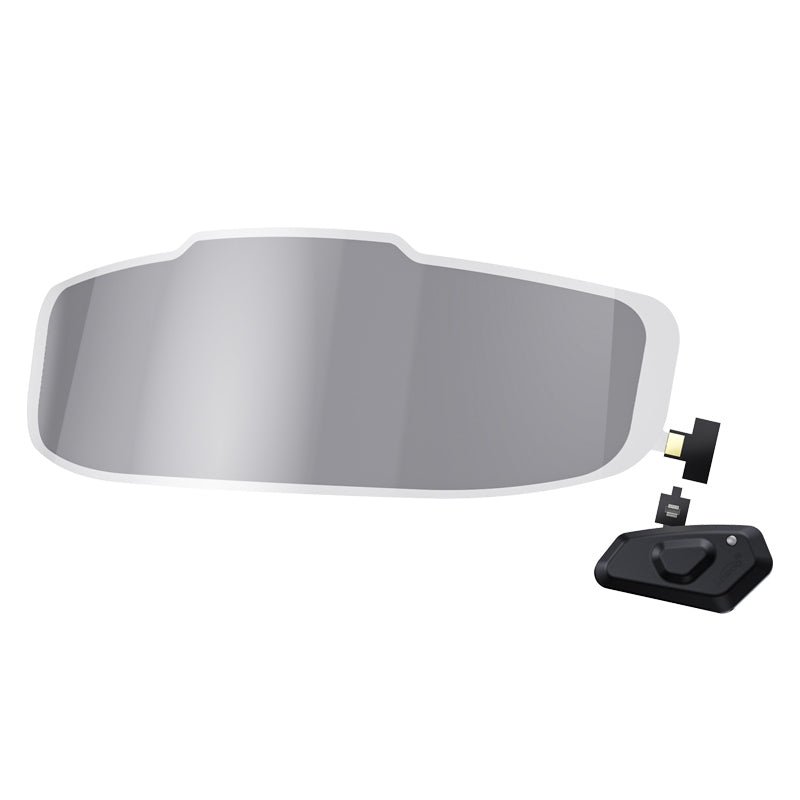
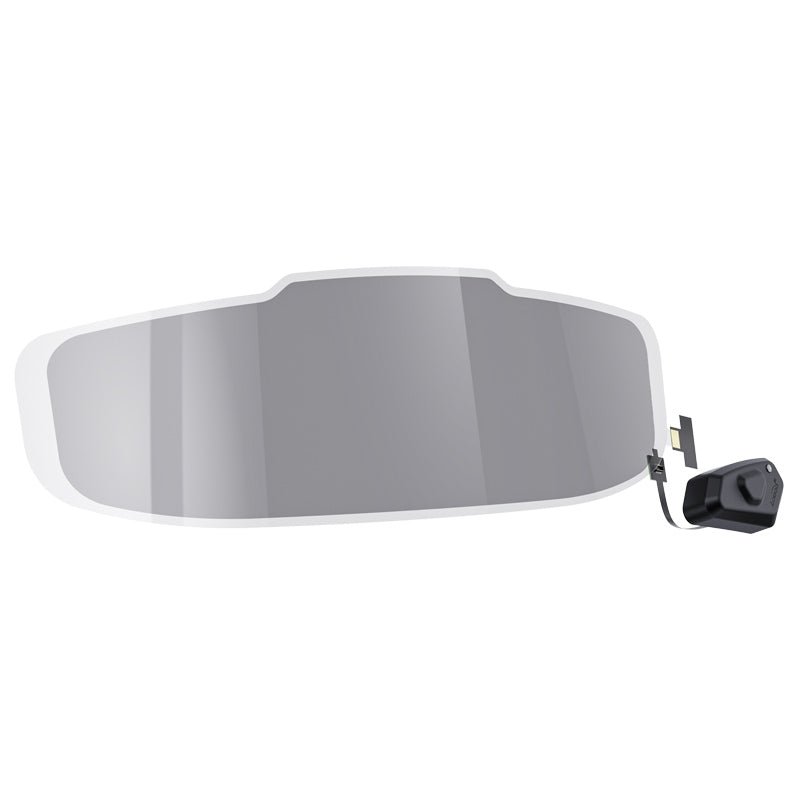
Traditional photochromic visors change tint through a chemical reaction triggered by UV light. That works on a bright, sunny motorway. It doesn't work in a tunnel, under tree cover, in overcast conditions, or at night when an oncoming high beam hits you directly. The LOBOO HL08 is built on a completely different technology — electrochromic tinting, controlled by an electronic light sensor rather than UV exposure. The result is a 0.01-second tint response in any light condition, automatic or manual, regardless of whether the sun is shining. It fits most full-face helmet visors via a damage-free adhesive mount, weighs just 30g, and recharges via USB-C.
Electrochromic vs. Photochromic — Why the Technology Matters
The distinction is not just marketing — it changes what the visor can and can't do in real riding conditions. Photochromic lenses use silver halide crystals that darken when exposed to UV radiation. This means they respond slowly (3–5 seconds), they don't work effectively behind a windscreen that blocks UV, and they won't tint in a dark environment because there's no UV trigger. Electrochromic technology uses a voltage-controlled optical layer that responds to electrical signal from a light sensor — not UV. The HL08 detects ambient light intensity directly and adjusts tint in 0.01 seconds, regardless of UV levels, regardless of your windscreen, and regardless of whether you're riding into sunlight or out of a dark tunnel.
HL08 Key Features
- 0.01-Second Tint Response — 300× faster than typical photochromic visors. Enter or exit a tunnel at speed without a dangerous seconds-long blackout delay.
- Dual Mode Control — Auto Mode: the built-in light sensor continuously monitors brightness and adjusts tint automatically. Manual Mode: long-press to lock, then tap to cycle through tint levels on demand. Switch between modes without removing gloves.
- Anti-Fog Hydrophobic Coating — External hydrophobic layer repels rain and reduces fogging in cold or humid conditions. Internal scratch-resistant design is protected from road debris.
- Universal No-Drill Fit — 30g — Adhesive mount attaches to most full-face helmet visors without drilling or permanent modification. At 30g, it adds no meaningful weight to your helmet. Repositionable and removable if you change helmets.
- USB-C Rechargeable — Built-in 120mAh lithium battery, charged via USB-C. No disposable batteries, no proprietary charging cable. Operating temperature range −20°C to +50°C.
- UV Protection — Filters UV radiation in addition to visible light tinting, protecting your eyes during extended daylight riding without relying on UV as its tinting trigger.
When Does the HL08 Make the Biggest Difference?
The scenarios where electrochromic response time matters most are tunnels and sudden light changes. At 80km/h, a 3-second tint delay while entering a dark tunnel represents 67 metres of impaired vision. The HL08's 0.01-second response covers that same entry in under 25cm. For riders on mountain roads, forest tracks with dappled light, urban routes through underpasses, or night riding where oncoming high beams are a regular occurrence, this difference is practically significant rather than a specification footnote.
Compatible Helmets
The HL08 adhesive mount is designed for compatibility with most full-face motorcycle helmets on the market. The no-drill, damage-free mounting system works on curved and flat visor surfaces. Check the product listing for specific helmet geometry guidance — helmets with heavily contoured or very small visor surfaces may require assessment before purchase. The HL08 pairs naturally with LOBOO's broader visibility system: LED auxiliary lights for external illumination and a phone holder for navigation — together covering all three dimensions of night and low-light riding safety.