
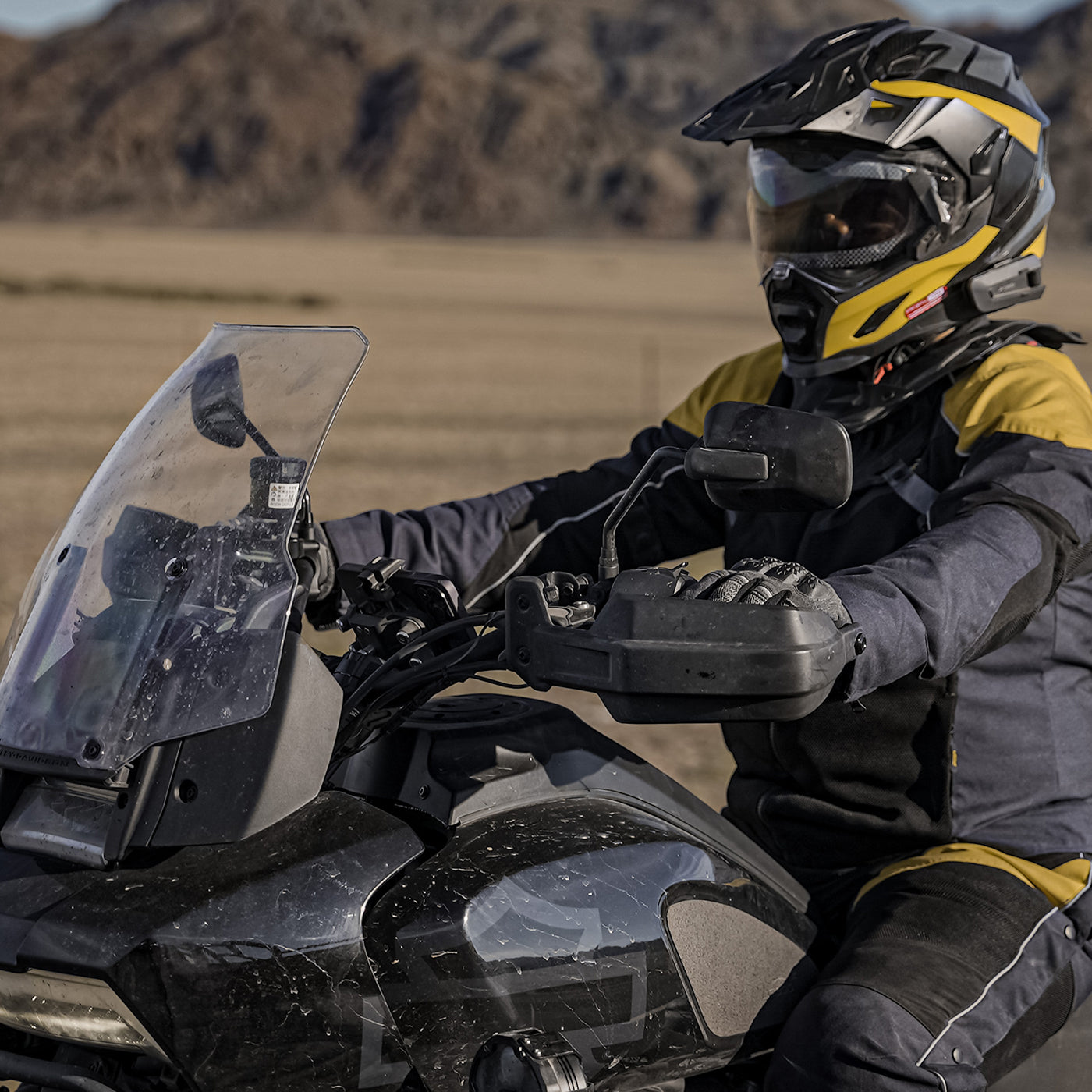
설계도를 넘어. 야생으로.
X-Team
어떤 부품이든 작업장을 떠나기 전에 최종 테스트를 거칩니다. 이를 우리는 전담 X-Team이 주도하는 실제 환경 검증 과정이라고 부릅니다.
Frequently Asked Questions
What is the difference between an engine guard and a crash bar?
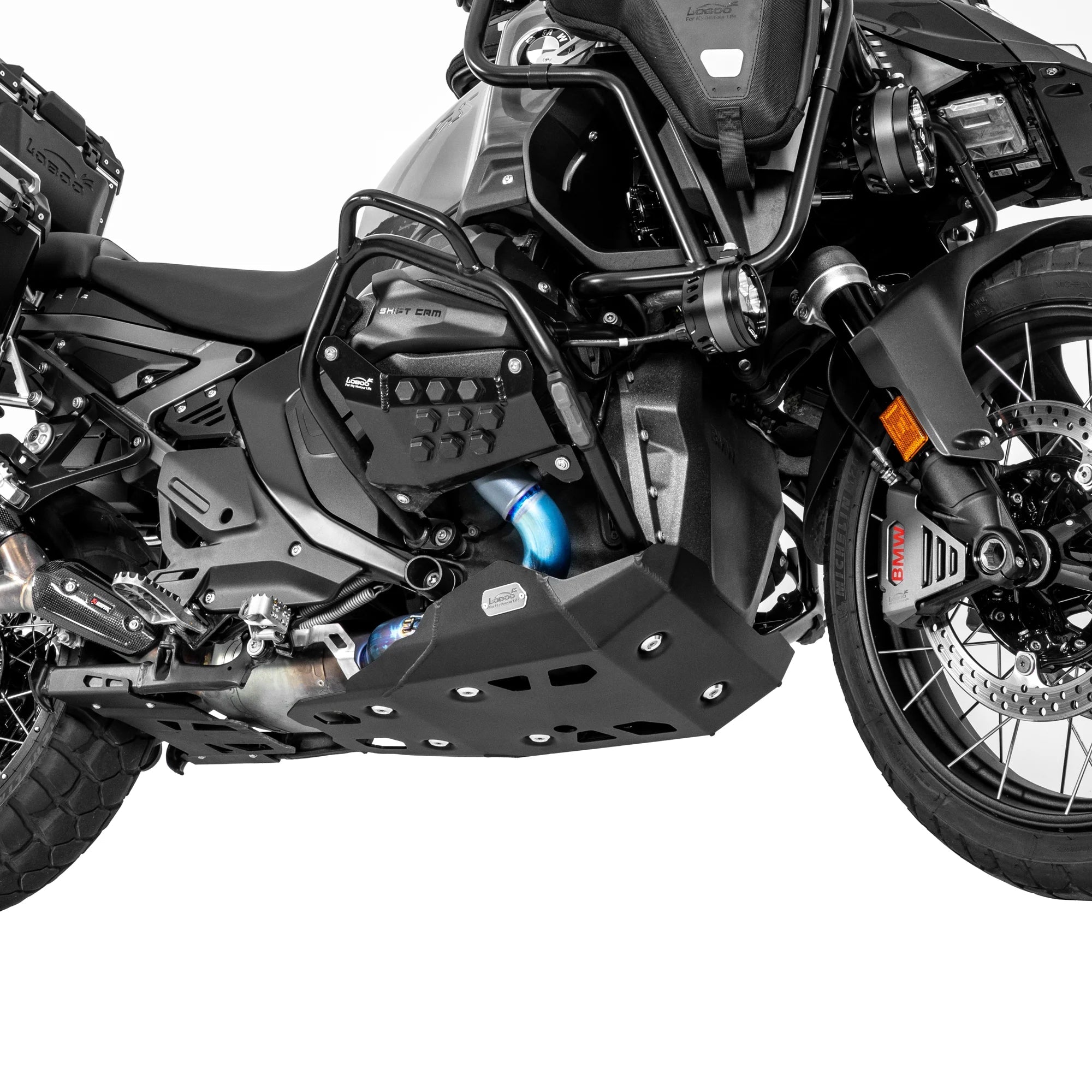
An engine guard (skid plate or bash plate) mounts under the engine to protect the oil pan, sump, and exhaust headers from rocks and debris that come up from the trail surface below. A crash bar is a tubular steel guard that wraps around the engine sides to absorb lateral impact during a tip-over. They protect against completely different threats — one from below, one from the side — and many ADV riders run both simultaneously, since the two systems mount independently and don't interfere with each other.
Can I still change my oil with the engine guard installed?
Yes — all LOBOO engine guards include pre-cut access ports aligned to the oil drain plug and filter on each specific model. This was a deliberate design choice: skid plates that require removal for every service quickly get left off. By keeping your drain plug accessible through the guard, LOBOO ensures you actually keep the protection in place. The access port positions are verified against each bike's OEM service layout, so the alignment is exact.
Why does LOBOO use 4mm aluminum instead of the more common 3mm?
Three millimetres is adequate for light gravel trails and low-speed off-road use. Four millimetres provides meaningfully better resistance to the sharp, high-energy rock strikes that occur on technical ADV terrain — a rock corner at speed, a hard landing off a step, or a fast trail section with exposed roots. The weight penalty is small (typically under 200g difference for a full-size skid plate), but the impact resistance increase is significant. LOBOO's X-Team validated the 4mm spec through actual trail use, not just lab testing.
Will the engine guard affect ground clearance?
Minimally. LOBOO engine guards are profiled to closely follow the engine's existing underside geometry, adding only the plate thickness (4mm) to the effective lowest point in most cases. The guard is designed to clear the same obstacles your stock bike clears, with the difference that when contact does occur, it's the aluminium plate taking the hit rather than your oil pan. On the BMW R1300GS, the guard profile is matched to the OEM chassis contours to minimise any clearance reduction.
Does the guard rattle or vibrate at speed?
No — LOBOO engine guards use rubber gaskets between the guard and the frame mounting points. These vibration-damping mounts absorb the resonance that causes bare metal-to-metal guards to rattle at highway speeds or on rough roads. The rubber also cushions secondary impact force, reducing stress at the bolt attachment points over time. If you ever notice any vibration after installation, check that all bolts are torqued to spec — this is the most common cause of post-install noise on any bolt-on guard.
Is the engine guard compatible with aftermarket exhaust systems?
LOBOO engine guards are designed around OEM exhaust routing for each supported model. If you're running an aftermarket exhaust with a different pipe path or header position, check the clearance between the guard profile and your exhaust before ordering. Full-system exhausts that re-route headers low and wide are the most likely fitment conflict — slip-on exhausts that only replace the muffler section are generally compatible. Contact our team with your exhaust brand and model if you're unsure.
What other protection should I pair with an engine guard?
For comprehensive ADV protection, an engine guard works best alongside crash bars (side protection from tip-overs), a headlight guard (stone chip and branch protection for the headlight lens), and a radiator guard if your model is covered. Together, these form a complete protection layer — underside, sides, and front — that covers the three most common impact zones on technical terrain.
오토바이 엔진 가드 및 스키드 플레이트 — 구매 가이드
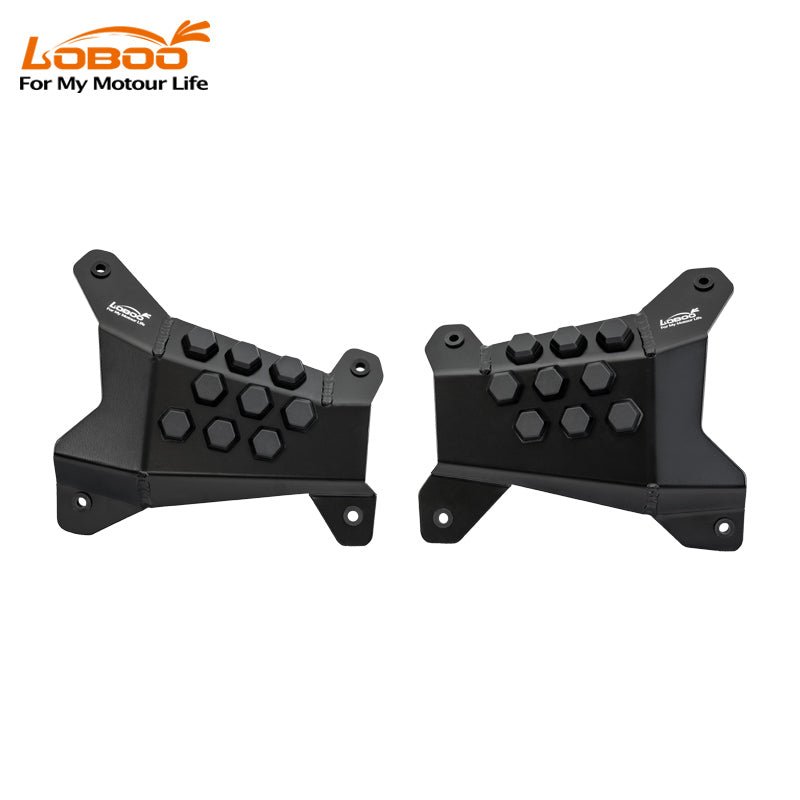
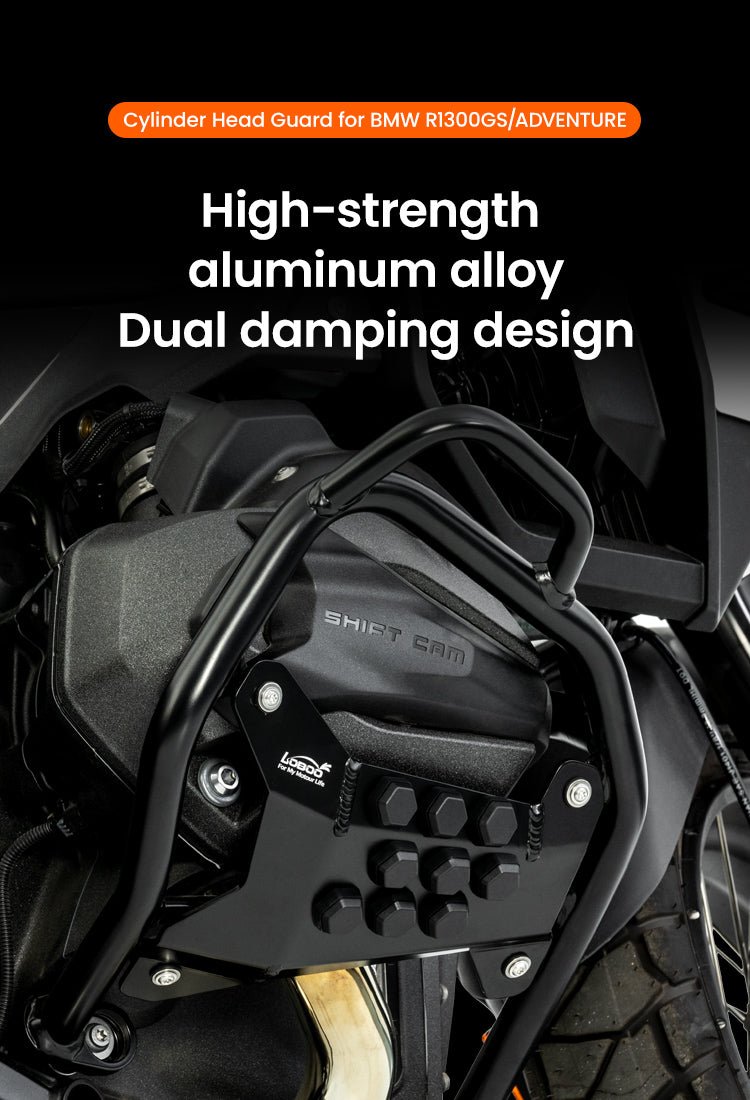
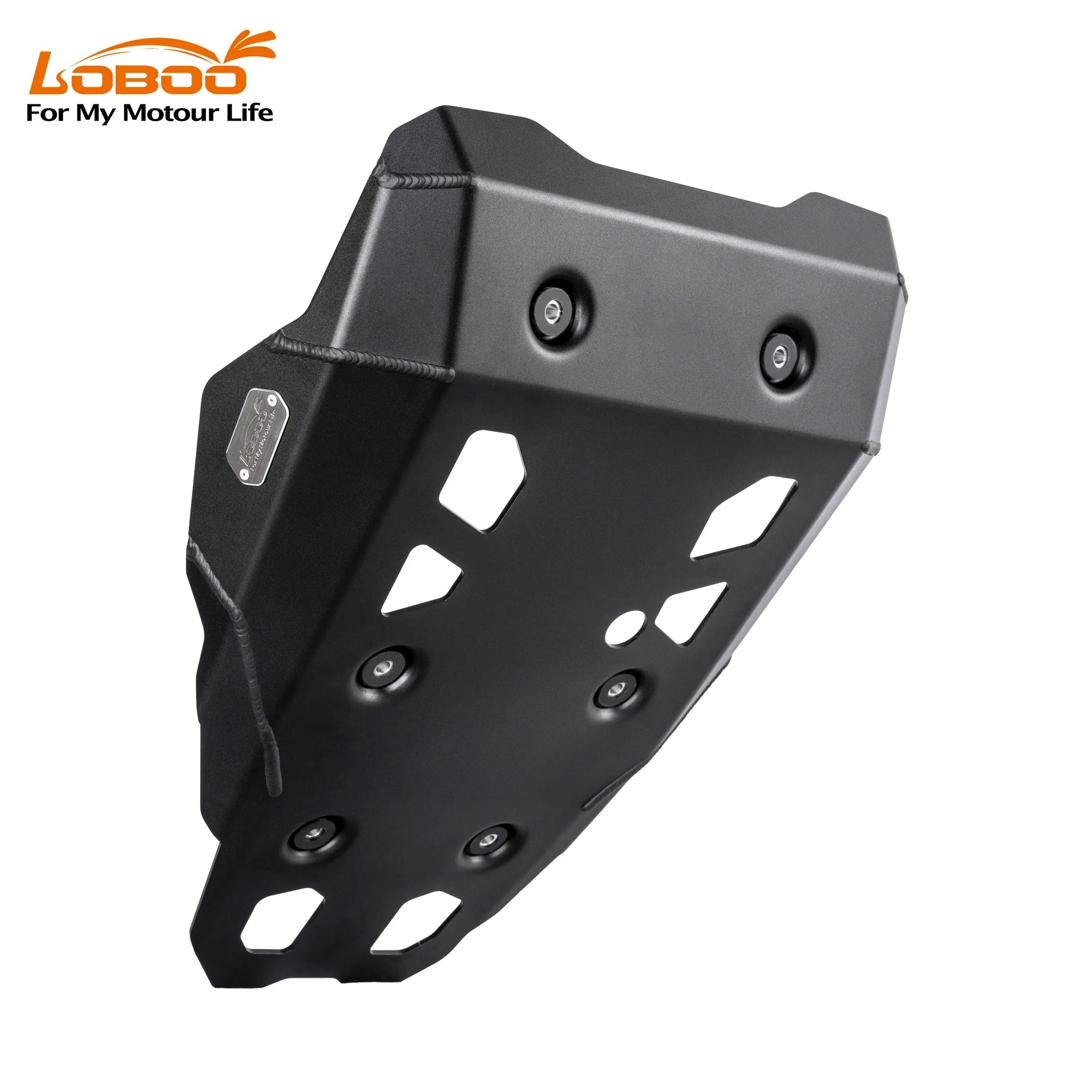
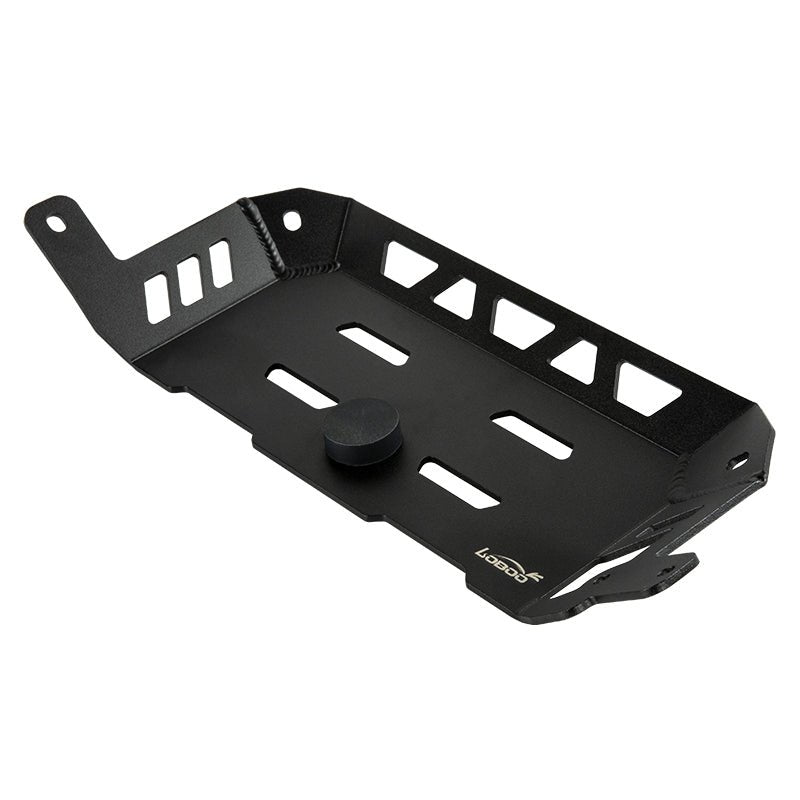
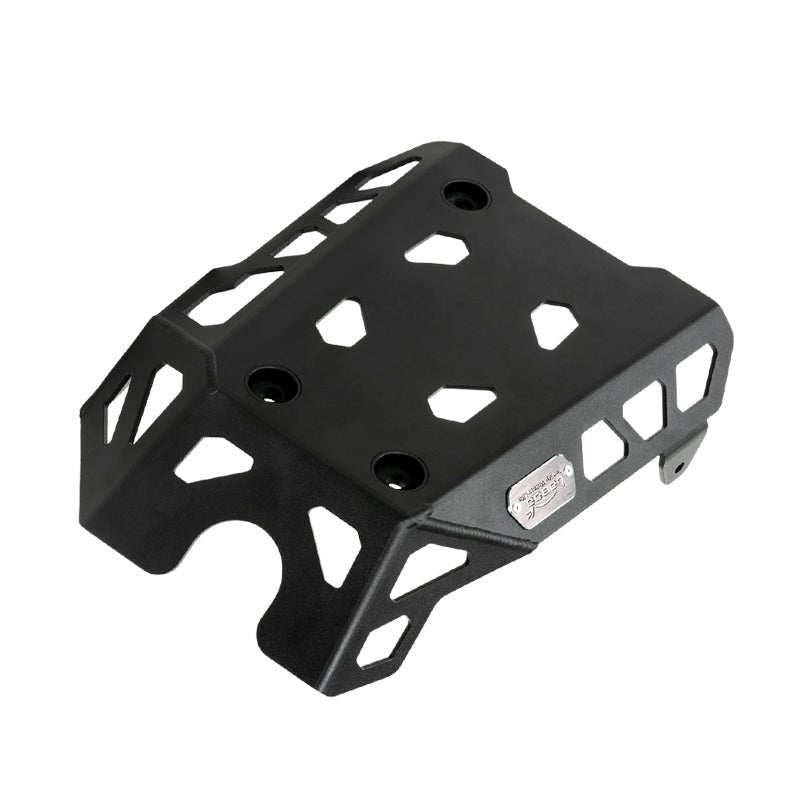
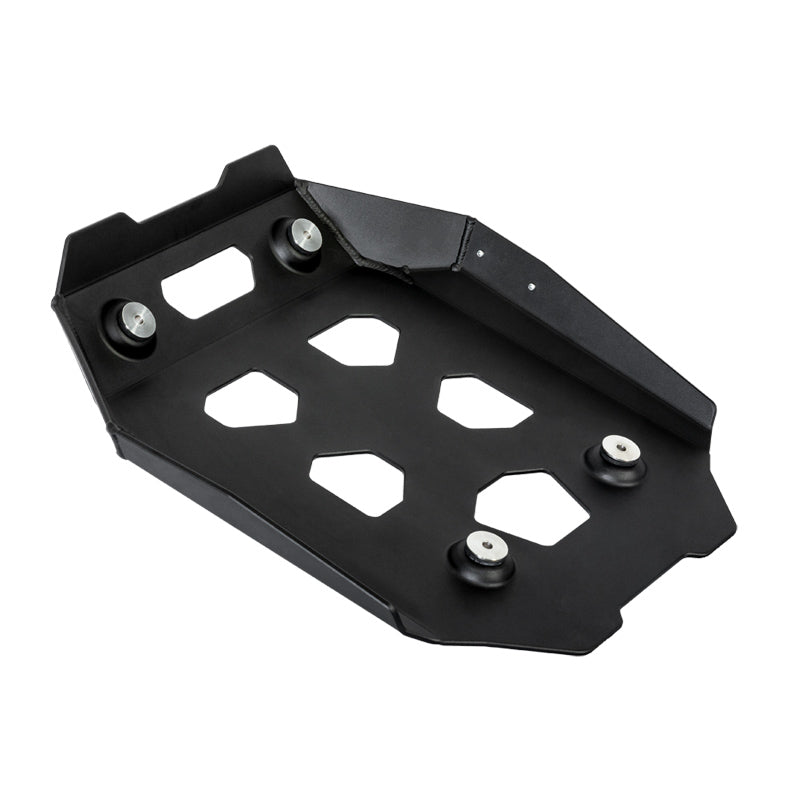
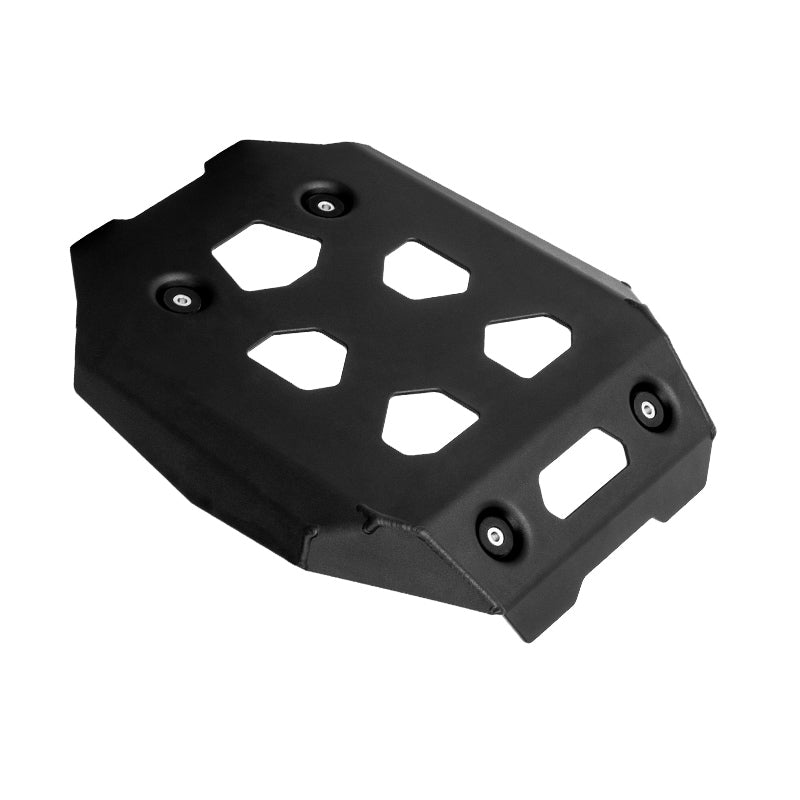
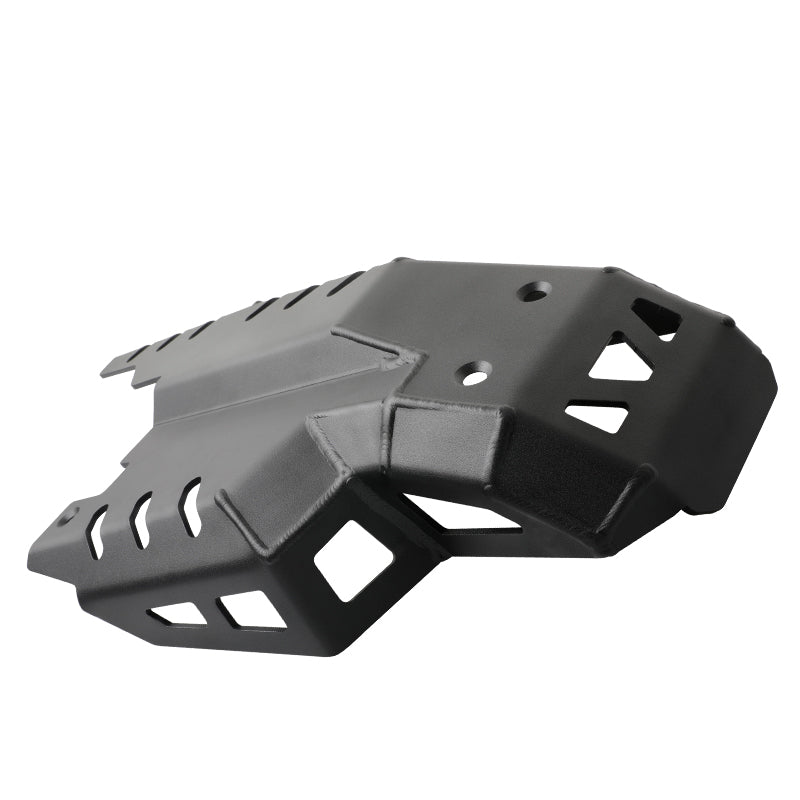
주행 중 지나가는 모든 바위는 수리비로 이어질 수 있습니다. 엔진 하부의 오일 팬, 배기 헤더, 프레임 스키드는 트레일의 잔해와 직접 부딪힐 위험에 노출되어 있습니다. 한 번의 강한 충격만으로도 오일 팬이 깨지거나 섬프에 구멍이 나고, 배기 장치가 휘어 그 자리에서 여행을 끝내야 할 수도 있습니다. LOBOO 엔진 가드는 BMW, Honda, KTM 어드벤처 모터사이클에 맞춰 정밀 성형한 4mm 두께 알루미늄 스키드 플레이트로, 엔진 부품 대신 충격을 흡수하도록 설계되었습니다.
4mm 두께가 적합한 이유
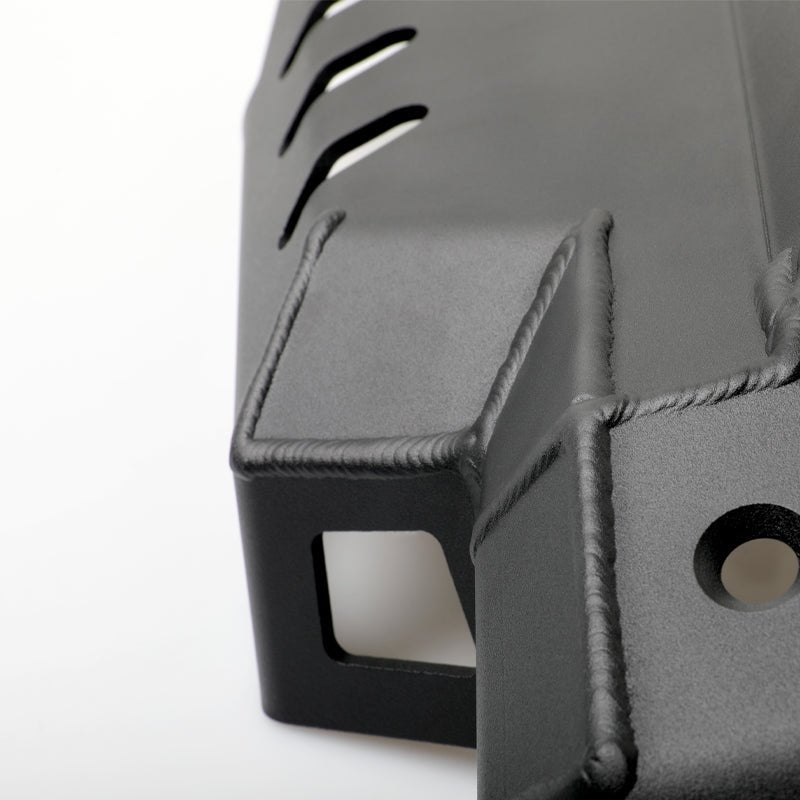
대부분의 애프터마켓 스키드 플레이트는 3mm 알루미늄을 사용합니다. 가벼운 트레일 주행에는 충분하지만, 실제 ADV 라이딩에서 발생하는 강한 바위 충격에는 부족할 수 있습니다. LOBOO는 엔진 가드 제품군 전체에 4mm 고강도 알루미늄 합금을 사용합니다. 이 1mm의 추가 두께는 빠른 트레일 구간이나 도심 가장자리에서 예상치 못하게 마주치는 바위, 나무뿌리, 콘크리트 연석에 대한 충격 저항성을 크게 높여 줍니다. 충격 영역 아래에 용접 이음매가 없는 일체형 성형 구조는 충격을 특정 연결부에 집중시키지 않고 플레이트 전체로 분산합니다.
- 4mm 고강도 알루미늄 합금 — 일반적인 3mm 가드보다 두꺼운 소재를 사용해 바위 충격에 대한 저항성이 뛰어납니다. 충격 영역에 이음매가 없는 일체형 성형 구조입니다.
- 오일 배출구 사전 설계 — 오일 배출 플러그와 필터에 맞춰 정비용 개구부를 배치했기 때문에 정기 점검을 위해 가드를 탈거할 필요가 없습니다. 더 많이 달리고, 정비 작업은 줄이세요.
- 진동 저감 고무 마운트 — 가드와 프레임 사이의 고무 개스킷이 전달되는 진동을 줄이고 2차 충격을 흡수해 장시간 주행 중 장착 볼트가 풀리는 것을 방지합니다.
- 아노다이징 표면 마감 — 검정 또는 은색의 부식 방지 아노다이징 코팅이 트레일의 진흙, 도하, 마모를 견디며 벗겨지거나 녹슬지 않습니다.
- 차량 손상 없는 볼트 온 설치 — 순정 프레임 장착 지점에 직접 설치됩니다. 드릴 작업이나 용접, 차량 구조에 대한 영구적인 개조가 필요하지 않습니다.
엔진 가드와 크래시 바의 차이점은 무엇인가요?
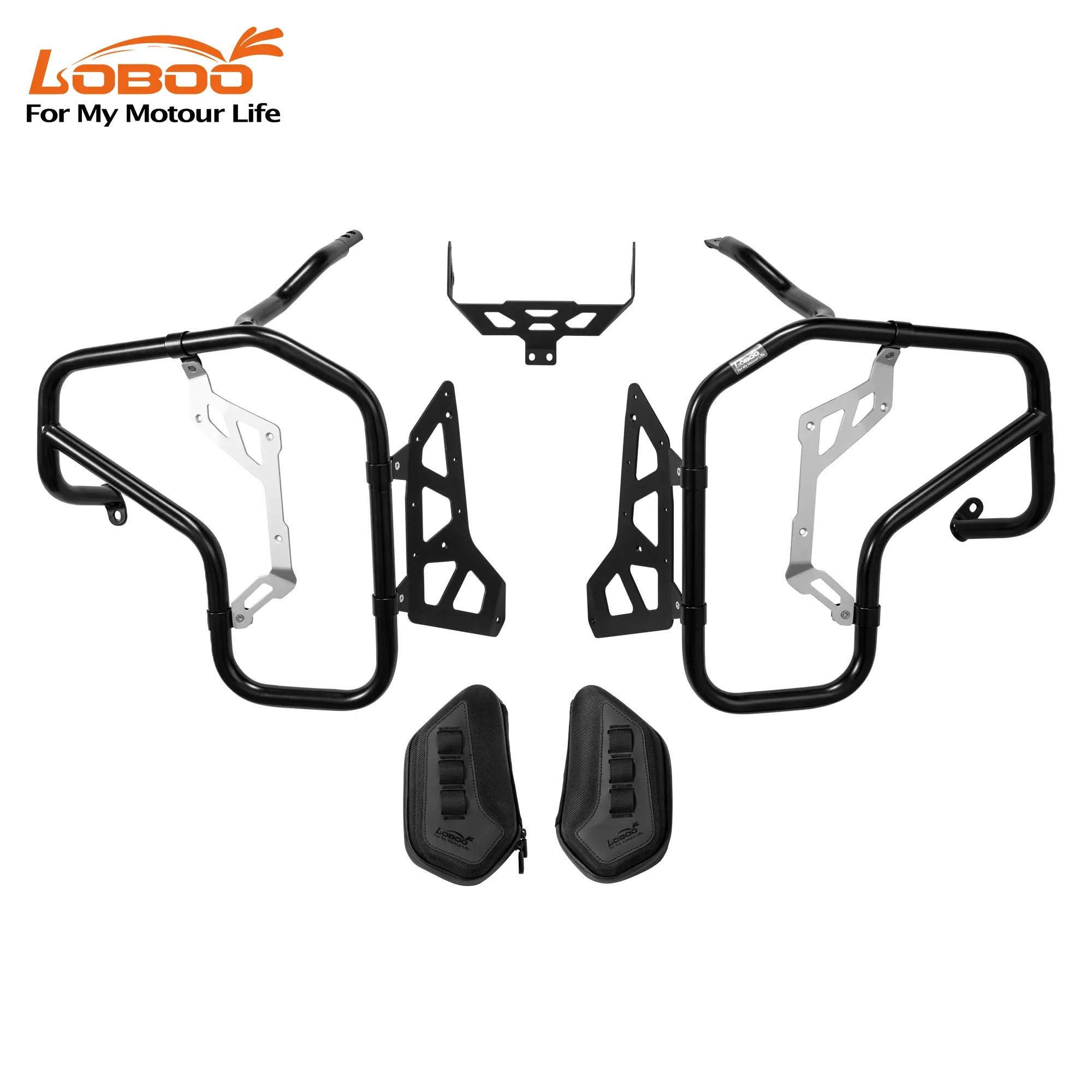
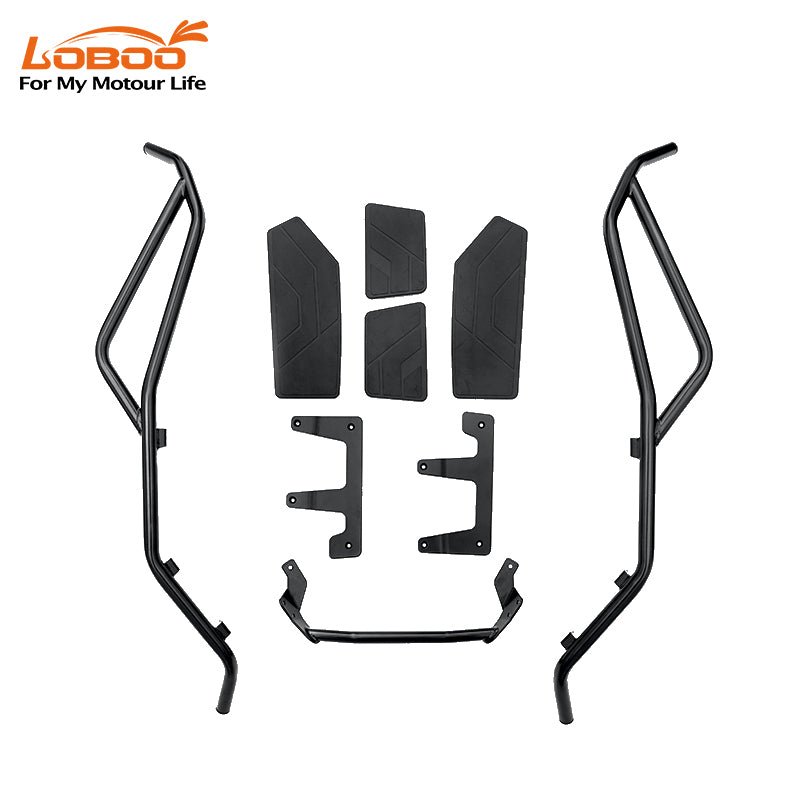
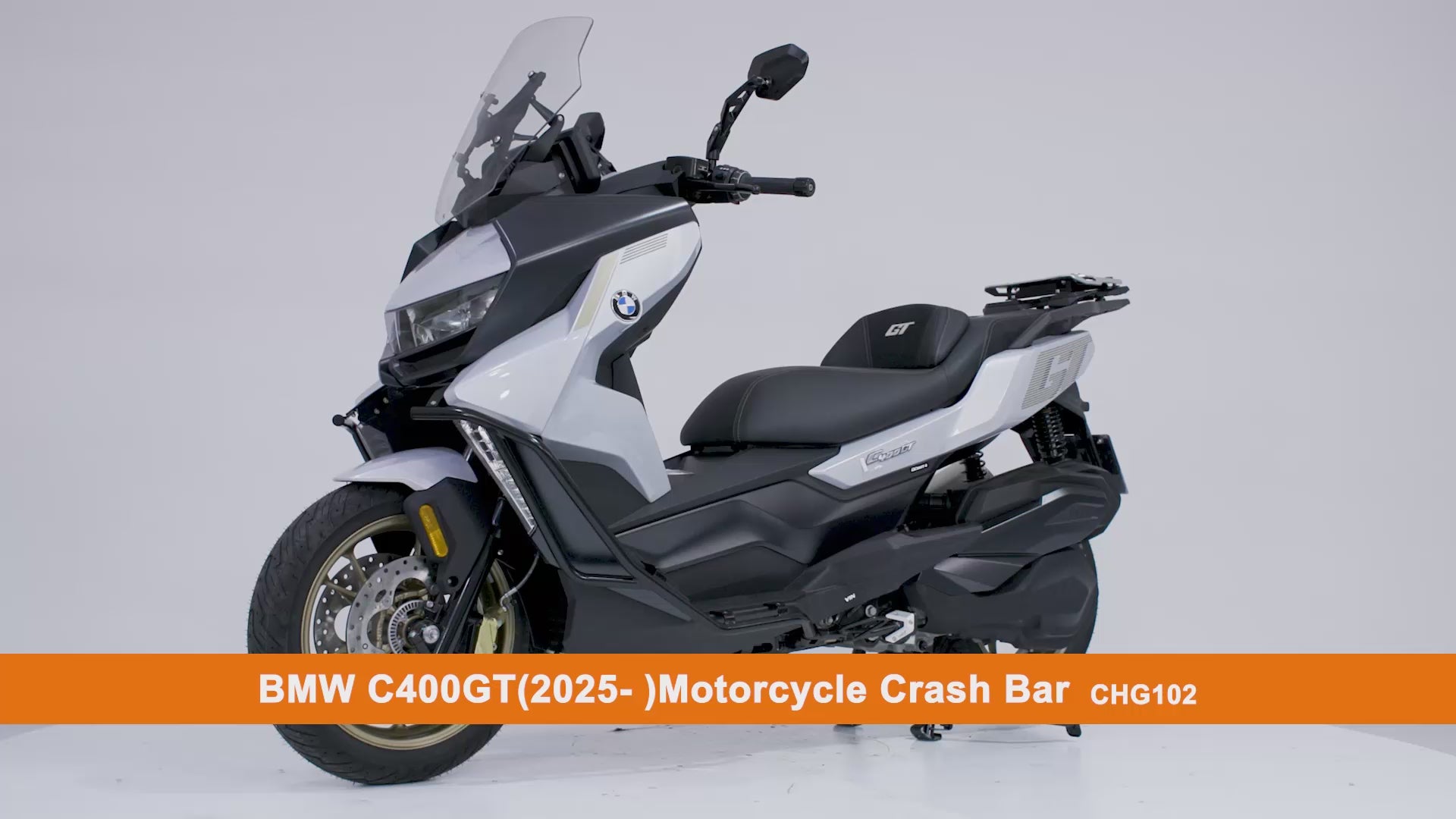
두 제품은 서로 다른 위협으로부터 모터사이클의 서로 다른 부위를 보호합니다. 크래시 바는 엔진 측면과 페어링을 감싸는 관형 강철 가드로, 전도 시 측면 충격을 흡수합니다. 즉, 모터사이클이 옆으로 넘어질 때 발생하는 충격으로부터 보호합니다. 엔진 가드는 엔진 아래에 장착하는 평평한 알루미늄 스키드 플레이트로, 주행 중 지나가는 바위, 나무뿌리, 잔해에서 발생하는 수직 및 전방 충격을 흡수합니다. 진지한 ADV 라이더라면 두 제품을 함께 사용합니다. 크래시 바는 전도 보호를, 엔진 가드는 트레일 잔해 보호를 담당합니다. 두 시스템은 서로 독립적으로 장착되며 상호 간섭하지 않습니다.
호환 모델
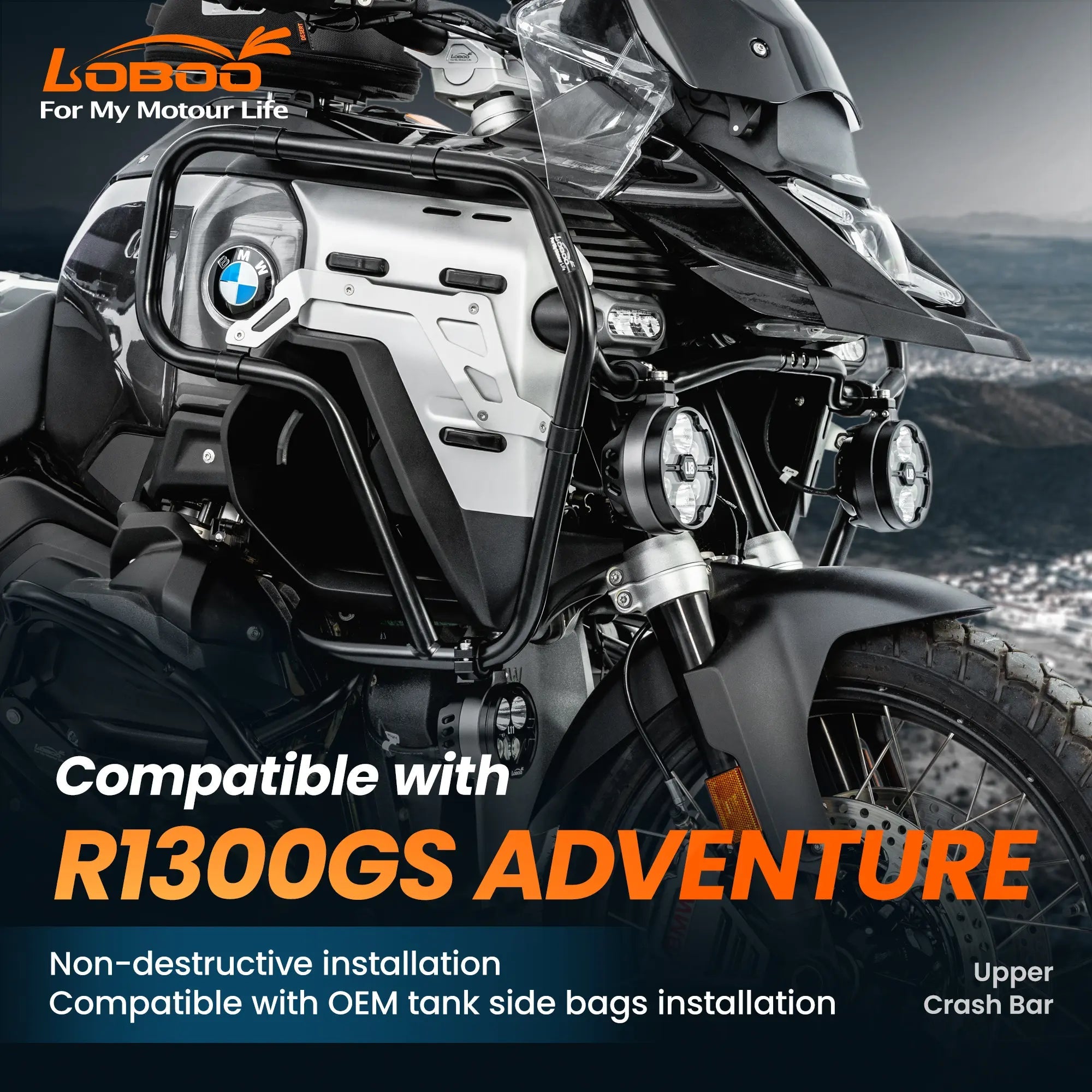
현재 호환 모델에는 BMW R1300GS / R1300GS Adventure(2023년 이후), Honda CB500X(2019년 이후) / NX500 / CB400X, KTM 790/890 Adventure가 포함됩니다. LOBOO는 Yamaha XMAX 300용 3mm 가드도 제공하므로, 전체 호환 세부 정보는 각 제품 페이지에서 확인하세요. 가장 오프로드 주행이 많은 모델을 대상으로 한 X-Team 테스트 데이터를 바탕으로 엔지니어링을 진행하며, 새로운 호환 모델이 정기적으로 추가됩니다.
언더캐리지 보호를 완성하세요
엔진 가드는 하부를 보호합니다. 여기에 스테인리스 스틸 크래시 바를 함께 사용하면 측면과 하부를 동시에 보호하는 전방위 보호 시스템을 구축할 수 있습니다. 해 질 무렵 기술적인 구간을 주행할 때 시야를 확보하려면 LED 보조등을 추가하세요. 모든 접지 지점에서 자신감 있는 주행이 필요할 때는 와이드 풋페그와 킥스탠드 연장 장치를 더해 실용적인 ADV 구성을 완성할 수 있습니다.