
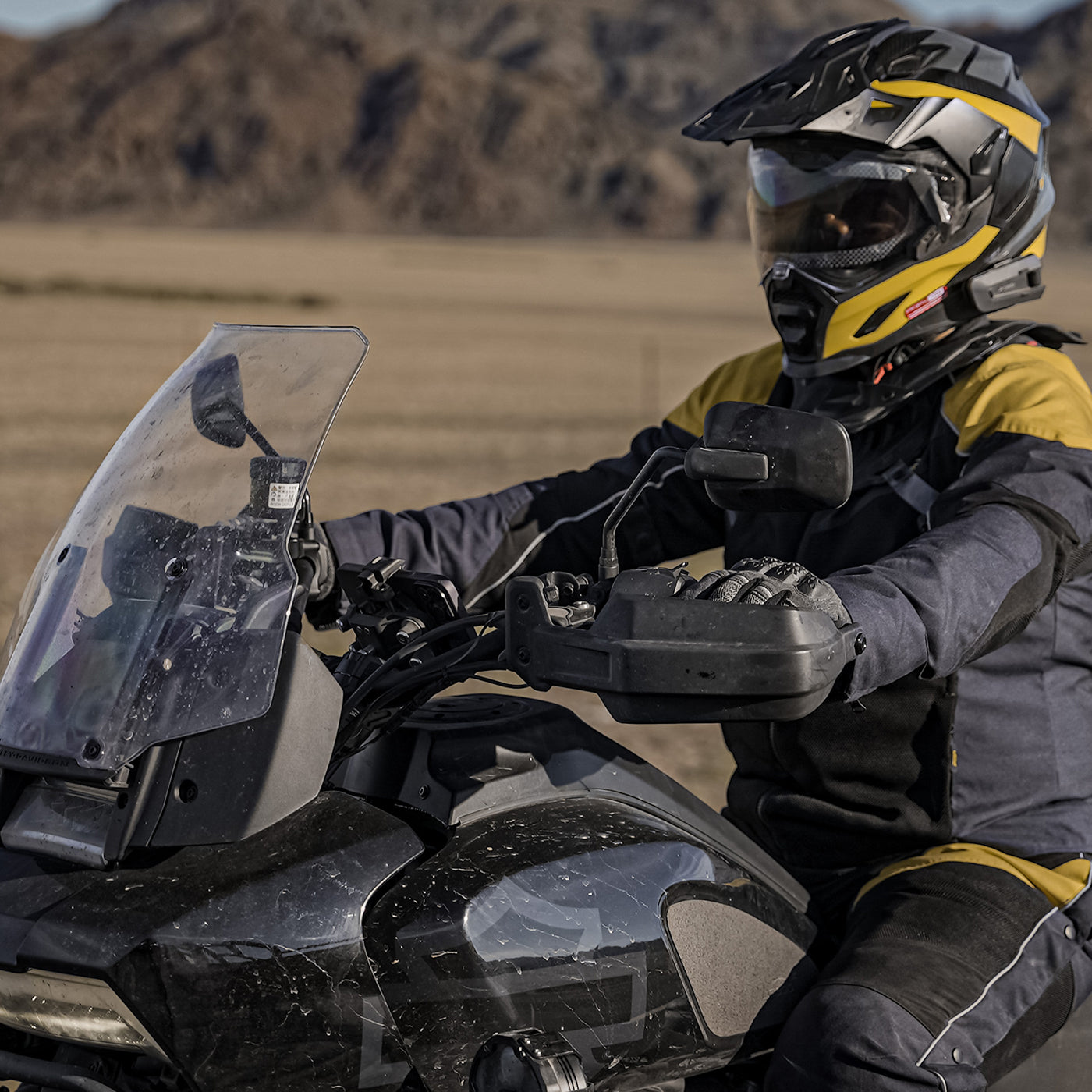
Oltre il progetto. Verso la natura selvaggia.
X-Team
Prima che qualsiasi pezzo lasci il nostro laboratorio, viene sottoposto al test definitivo. È un processo che chiamiamo validazione nel mondo reale, guidato dal nostro dedicato X-Team.
Frequently Asked Questions
Why is the rear brake reservoir so vulnerable on the KTM 1290 Super Adventure?
On the KTM 1290 Super Adventure S/R, the rear brake fluid reservoir is mounted in an exposed right-side position and secured by a single bolt. This design leaves it vulnerable to impact from trail debris, contact with vegetation or barriers in tight sections, and direct ground contact in a tip-over. A single hard impact can crack the reservoir housing or shear the mounting point entirely, spilling brake fluid and rendering the rear brake non-functional. The LOBOO guard wraps the reservoir in a CNC aluminum cage that absorbs that impact before it reaches the component itself.
Do I need to drain the brake fluid or bleed the brakes to install the guard?
No — the LOBOO rear brake reservoir guard is an external bolt-on accessory that mounts around the outside of the reservoir without touching the brake circuit. There is no fluid work involved, no bleeding required, and no brake system components are disconnected during installation. The guard fits over the existing reservoir mounting in minutes with a basic Allen key set. All hardware is included.
Will the guard interfere with checking or topping up the brake fluid?
The guards are designed to allow visual inspection of the fluid level window on the reservoir without removal. For topping up brake fluid, the guard may need to be partially loosened to access the reservoir cap depending on the specific model and reservoir orientation — this takes under a minute. Given that brake fluid top-ups are infrequent maintenance tasks rather than daily checks, this minor access consideration is a worthwhile trade-off for permanent impact protection.
Is the KTM guard compatible with both the S and R variants of the 1290?
Yes — the LOBOO rear brake reservoir guard fits both the KTM 1290 Super Adventure S and the 1290 Super Adventure R. Both variants use the same rear brake master cylinder and reservoir mounting position. Check the individual product listing for the specific year range covered, as reservoir mounting geometry can vary between generation updates.
What happens if brake fluid leaks onto the rear tyre?
Brake fluid is a highly effective lubricant on rubber — if it contacts the rear tyre, grip is dramatically reduced and the tyre must be considered contaminated and unsafe to ride on until thoroughly cleaned. Brake fluid also aggressively attacks painted surfaces and corrodes certain metals quickly on contact. This is why preventing reservoir damage is a genuine safety priority rather than just an aesthetic concern. The reservoir guard reduces the risk of the crack or impact that causes a leak in the first place.
What other small guards and protectors pair well with a reservoir guard?
For complete small-component protection on a technical ADV build, the rear brake reservoir guard pairs well with a headlight guard for lens protection, a radiator guard for the cooling system, and a rear brake pedal extension for improved off-road braking leverage. Together these small, affordable upgrades cover the components that are most frequently damaged in low-speed drops and trail incidents — the kind of damage that doesn't show up in crash statistics but ends more rides than serious accidents do.
Is this guard worth buying if I mostly ride on paved roads?
The guard is most valuable for riders who regularly encounter gravel, dirt, or unpaved surfaces where debris strikes are frequent. However, even road riders benefit from the protection in parking lot tip-overs and low-speed urban incidents — both of which are common causes of right-side damage on ADV bikes. At the price point of a LOBOO reservoir guard, the cost of not having one installed is difficult to justify once you're aware of the failure mode it prevents.
Protezioni per il serbatoio del liquido freno posteriore — Guida all’acquisto per la protezione ADV
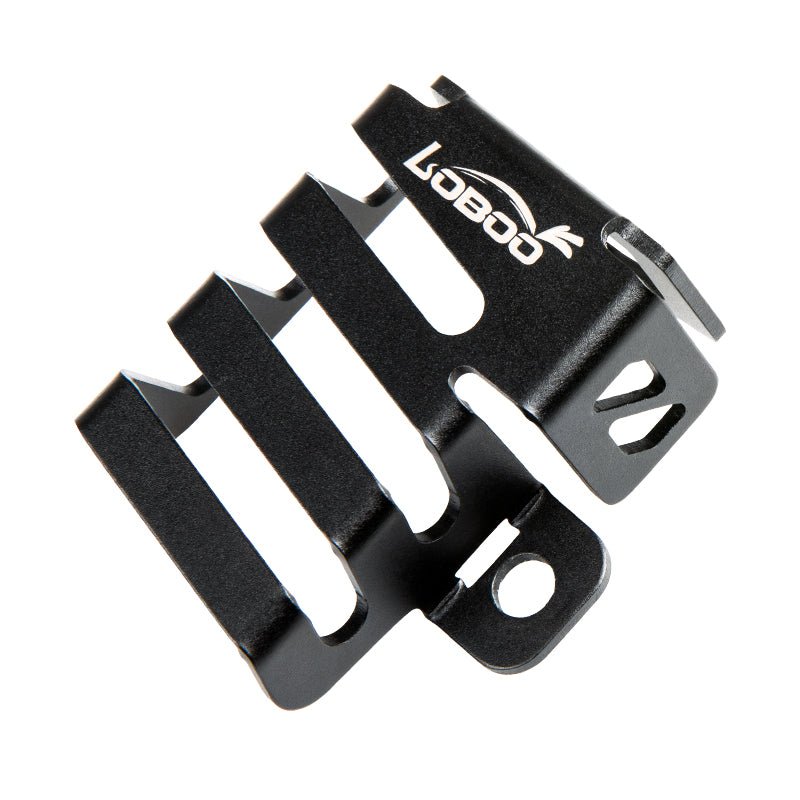
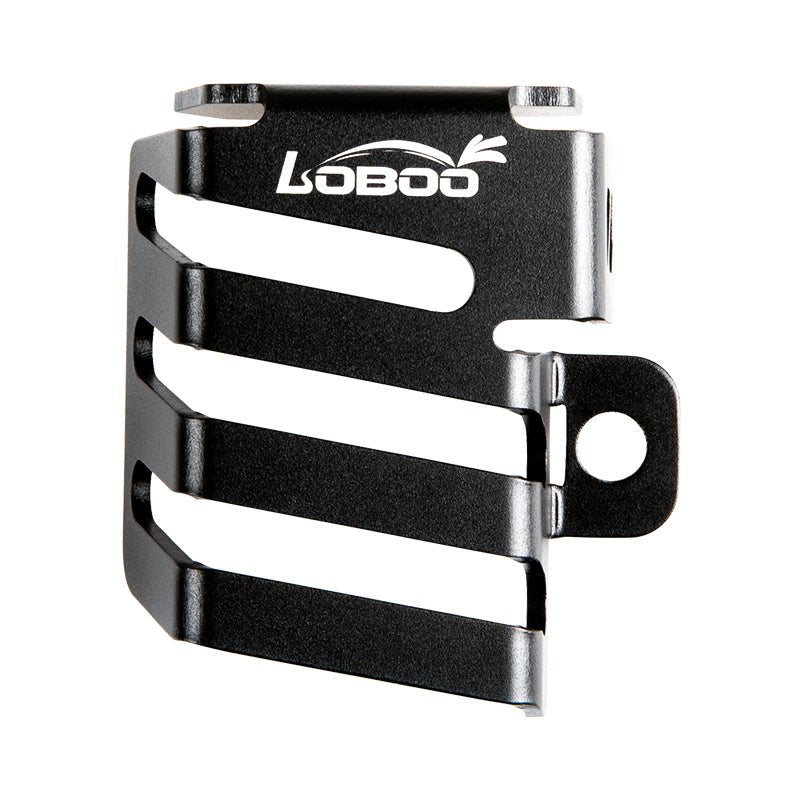
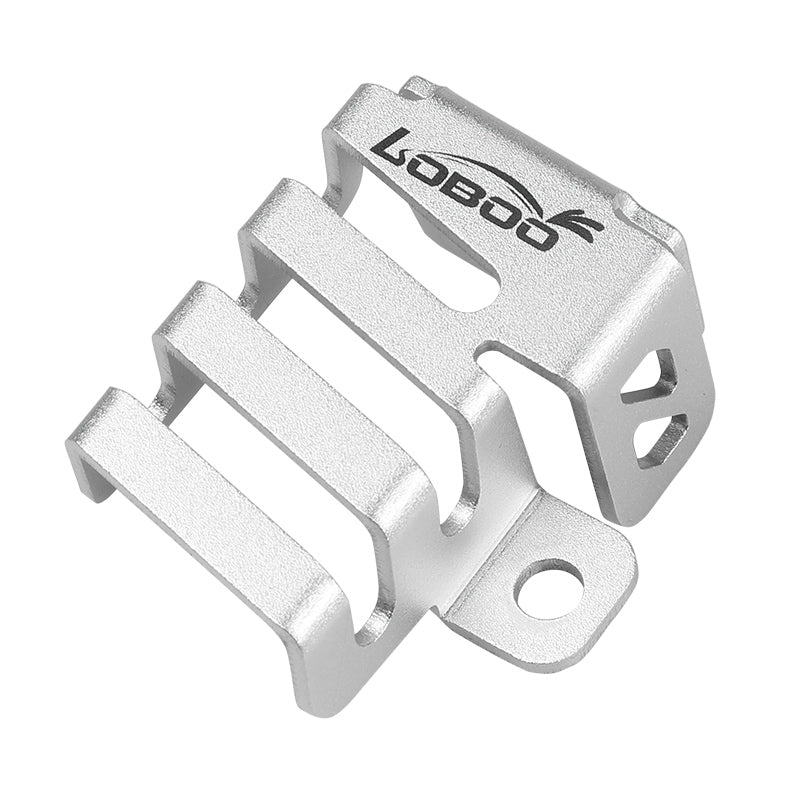
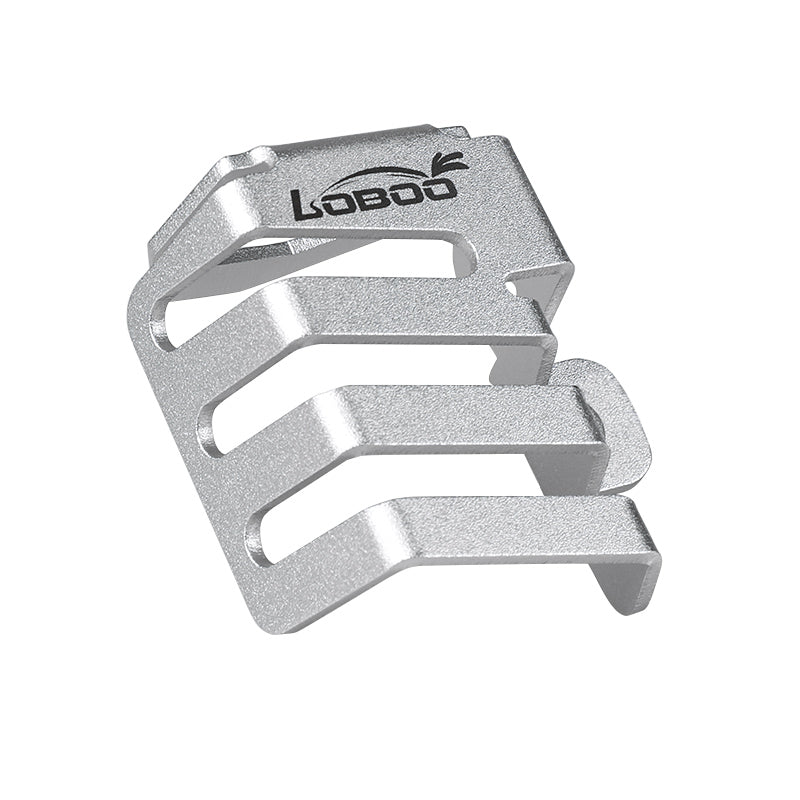
Il serbatoio del liquido freno posteriore è uno dei componenti più trascurati — e più vulnerabili — di una moderna moto da avventura. Sulla KTM 1290 Super Adventure, il serbatoio è montato in una posizione esposta sul lato destro della moto e fissato con un solo bullone. È sufficiente una caduta da fermo, l’impatto con una pietra o un urto contro una barriera per rompere l’alloggiamento, tranciare il supporto o versare il liquido freni sul pneumatico posteriore — situazioni che possono causare un’immediata perdita dei freni. Una protezione LOBOO per il serbatoio del liquido freno posteriore è una staffa in alluminio CNC compatta ed economica, che avvolge il serbatoio e assorbe l’impatto prima che raggiunga il componente responsabile del funzionamento del freno posteriore.
Perché è un aggiornamento fondamentale per la sicurezza, non un semplice elemento estetico
La maggior parte degli accessori ADV migliora il comfort o la praticità. Una protezione per il serbatoio del freno posteriore è diversa: protegge direttamente un componente dell’impianto frenante. Il liquido freni è igroscopico e corrosivo: se il serbatoio si rompe e il liquido fuoriesce sul pneumatico posteriore o sul forcellone, si perde aderenza e si rischia di perdere il controllo della moto. Se il serbatoio viene completamente tranciato durante una caduta da fermo — eventualità possibile sulla KTM 1290 a causa del fissaggio con un solo bullone — il circuito del freno posteriore rimane privo del relativo serbatoio e il freno diventa inutilizzabile. Non si tratta di un rischio teorico per i motociclisti ADV che affrontano terreni tecnici. È il tipo di guasto che ha già interrotto viaggi e danneggiato moto. La protezione LOBOO costa una frazione rispetto alla sostituzione del serbatoio e si installa in pochi minuti.
- Struttura in alluminio CNC — Lega ad alta resistenza, lavorata con precisione per avvolgere l’alloggiamento del serbatoio e assorbire gli impatti laterali e verticali senza trasmettere la forza al corpo del serbatoio.
- Finitura con ossidazione mediante sabbiatura — Trattamento superficiale anodizzato che migliora la resistenza alla corrosione, la durezza e la resistenza all’abrasione, progettato per durare più a lungo delle condizioni che rendono necessaria la protezione.
- Installazione imbullonata senza modifiche — Si monta direttamente sul supporto esistente del serbatoio senza rimuovere o modificare alcun componente dell’impianto frenante. Nessuno spurgo, nessun intervento sul liquido, nessuna modifica permanente.
- Compatibilità specifica per modello — Progettata sulle dimensioni esatte del serbatoio e sulla geometria di fissaggio di ciascun modello supportato. Nessuna staffa universale, nessun inserto di spessoramento, nessun adattamento improvvisato.
Modelli compatibili
Le compatibilità attuali includono la KTM 1290 Super Adventure S/R e la Harley-Davidson Pan America 1250. Entrambi i modelli hanno in comune un serbatoio del liquido freno posteriore relativamente esposto, situato in una posizione vulnerabile ai detriti del percorso e agli impatti dovuti alle cadute da fermo. Nuove compatibilità vengono aggiunte al completamento dei test specifici per modello da parte del team di progettazione LOBOO.
Completa la protezione del tuo impianto frenante
Una protezione salvaguarda il contenitore del liquido. Per una protezione completa dell’impianto frenante e del telaio sui terreni tecnici, abbinala alle barre paramotore per assorbire le forze laterali delle cadute da fermo che più spesso minacciano il serbatoio, a una piastra paramotore per proteggere la parte inferiore dal basso e a un estensione del cavalletto laterale per ridurre la frequenza delle cadute da fermo sui terreni morbidi. Insieme, questi accessori costituiscono il sistema di protezione essenziale per le moto ADV utilizzate realmente in fuoristrada.